How to Remember What You Read in 2026: Turn Reading Into Retrieval Instead of Highlight Piles
Last Thursday I finished a chapter, felt productive for about five minutes, then tried to explain it without looking and stalled on the second definition. That is the annoying version of how to remember what you read. The reading went fine. The memory part never really started.
If you want a short answer first, here it is: read smaller chunks, stop sooner, close the source, try to say the idea back in plain language, and turn only the misses into flashcards. Most people do almost the reverse. They read too long, highlight too much, feel familiar with the material, and only discover the gap when the source is gone.
If you already use Flashcards, the practical version is simple: create cards only from the misses and let FSRS bring them back later. Do not turn the whole chapter into a deck just because you spent time reading it.
That gap gets easier to miss in 2026 because reading has more helpers now. AI can summarize, simplify, explain, and rephrase almost anything. Useful tools. Still not memory. If the workflow never makes you retrieve the idea without support, you can finish a lot of pages and keep very little.
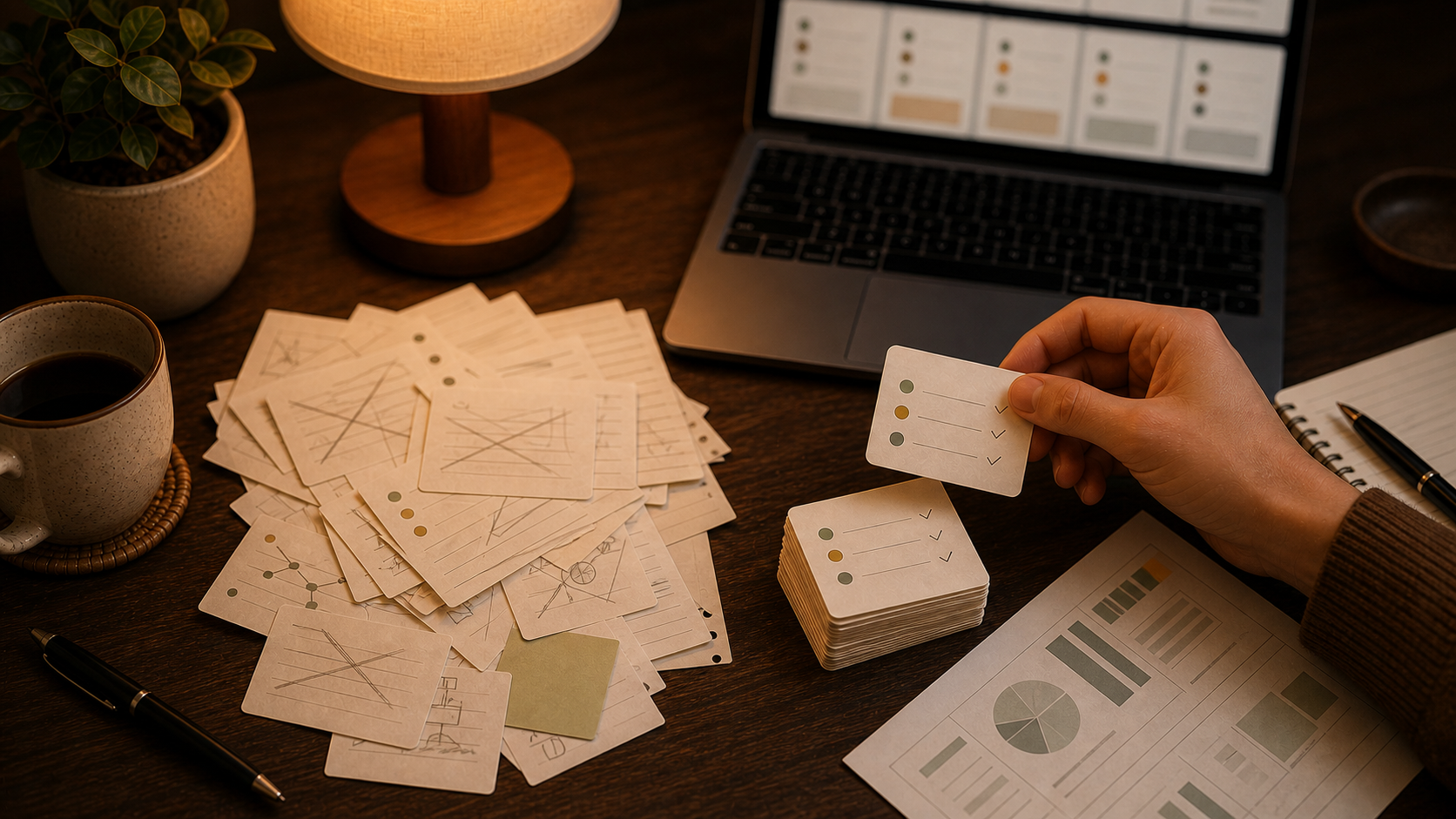
Finishing the page is not the same as storing the idea
This is the part that trips people up.
While you are reading, the information is right there:
- the paragraph is visible
- the heading tells you the topic
- the examples keep nudging the meaning back into place
- the bold term feels familiar because you just saw it twice
That creates a smooth feeling.
It also hides whether you can produce anything alone.
So when people ask how to retain what you read, I would not start with speed-reading tricks, prettier notes, or a bigger highlighter set. I would start by changing the test.
The useful question is simpler:
Can you say the key point back after the source disappears?
If not, keep reading less and retrieving sooner.
Use a section-sized reading loop, not a chapter-sized session
This is the main change I would make.
Do not read one whole chapter and only then check what stuck. By then the material is too blended together, and your recall turns vague:
- "I kind of know this part"
- "I would recognize it"
- "I just read it, so it is probably fine"
That is not stable enough.
I would work one small chunk at a time:
- one subsection
- one heading
- one concept cluster
- one theorem plus its conditions
- one short case, passage, or explanation block
That is also why broad source-conversion workflows often get bloated. If you want to turn one PDF, article, or notes file into cards, the smaller batches still win:
- How to Turn a PDF Into Flashcards in 2026
- How to Turn an Article Into Flashcards in 2026
- How to Turn Notes Into Flashcards in 2026
The retention problem starts before the cards. It starts with chunk size.
Start reading with one output in mind
Before I read a section, I want one simple target:
What should I be able to say or decide after this section is over?
That target changes how the reading feels.
Instead of passively moving through the page, you start looking for recall material:
- the definition you would need to produce cleanly
- the distinction you keep mixing up
- the process step that changes what happens next
- the condition that makes a formula or rule valid
- the exception that breaks the obvious answer
This is a lot better than highlighting every sentence that sounds smart.
If the section is dense, I would even write one scratch prompt before reading:
- "After this, I should be able to explain the difference between X and Y."
- "After this, I should know when to use this rule."
- "After this, I should remember the sequence."
That tiny setup creates a much better reading goal than "get through ten pages."
Close the source sooner
This is the step most people skip because it interrupts the comfortable part too early.
Read a small section. Then close it. Then try to recall.
You can do that by:
- saying the idea out loud
- typing a three-line recap
- writing the definition from memory
- sketching the steps in order
- answering a question you invent on the spot
The method matters less than the timing.
Do it while the section is still fresh enough that you can tell what failed.
If you wait until the end of the chapter, the misses blur together. If you stop after a subsection, the misses still have names.
That is the real bridge between active recall reading and useful flashcards later.
Your recall check should stay plain
I would not try to write beautiful notes here.
This is just a quick retrieval check. Plain and slightly ugly is fine.
What I want to see after each section is one of these:
- "Could explain osmosis, but mixed up hypertonic and hypotonic"
- "Forgot the second exception"
- "Know the formula, missed when not to use it"
- "Remembered the case outcome, not the reasoning"
That kind of scratch note is much better than a polished summary because it shows the actual memory problem.
A polished summary often hides the struggle.
A rough recall note exposes it.
If your reading usually turns into page-long notes, What Should Go on a Flashcard in 2026? is a good companion piece. The same filter helps here: keep what you actually missed, not the whole polished performance.
Most reading material contains more scaffolding than memory targets
This is why people over-card textbooks and under-remember them.
A typical reading section includes:
- the core idea
- setup that makes the idea easier to follow
- one or two examples
- transitions between paragraphs
- extra explanation for first-time understanding
- sometimes a diagram or story that helps in the moment
Only part of that deserves future retrieval.
If you are wondering how to study reading material without building a deck that feels like a second textbook, I would usually keep cards for these:
- definitions
- distinctions
- causes and effects
- steps in order
- conditions and constraints
- formulas and what they mean
- common confusions
- exceptions you keep missing
I would usually leave these out of the deck:
- broad summaries
- decorative examples
- transition sentences
- context that only helps while reading
- paragraphs that make sense only as a whole
- facts that feel official but will never matter again
That is where a lot of textbook frustration comes from. The source looks serious, so everything starts feeling card-worthy. It is not.
Turn the misses into cards, not the whole section
This is the change that saves time.
After the recall check, do not ask, "How do I preserve everything from this page?"
Ask, "What did I fail to retrieve cleanly enough that I want another shot at it later?"
That smaller question produces much better cards.
In practice, that usually means one small deck or tag for one reading unit inside Flashcards, not one giant chapter dump.
Say you read a biology section and your recall check says:
- mixed up mitosis and meiosis
- forgot which phase includes DNA replication
- could describe the purpose, not the sequence
Those become usable cards:
- Front: Which process reduces chromosome number by half? Back: Meiosis.
- Front: During which phase of the cell cycle does DNA replication happen? Back: S phase.
- Front: What comes after metaphase in mitosis? Back: Anaphase.
That is much better than one card that says:
- Front: Explain cell division.
Same reading. Very different review experience.
If you already have draft cards and they feel too broad, How to Make Better Flashcards in 2026 and How to Fix AI Flashcards in 2026 are the next steps.
Reading notes and memory notes should not be the same document
This habit helps a lot.
Reading notes are for understanding the material while it is open.
Memory notes are for capturing what did not survive once it closed.
When those two jobs get mixed together, the result is usually too long for review and too polished to show the real gaps.
So I would keep them separate:
- reading notes can keep examples, context, and broader explanation
- memory notes should keep misses, confusions, and future card candidates
That is also why many students feel stuck after a long reading session. They created plenty of notes, but very little that actually helps with study reading retention later.
AI is useful after your attempt, not before it
This is where current study tools are genuinely helpful if you use them at the right moment.
I would not start by asking AI to summarize the section before I try recall. That gives me a cleaner page and a weaker memory signal.
I would use AI after my own attempt:
- read one small section
- close it
- try to recall it myself
- mark what I missed
- ask AI to quiz, clarify, or draft cards only for those misses
That keeps the model in helper mode instead of replacement mode.
If you want a simple prompt, this one works:
Quiz me on this section one question at a time. Do not explain first. Wait for my answer. Keep track of what I miss, answer too vaguely, or confuse with something nearby. At the end, turn only those misses into plain front/back flashcards with short answers.
That workflow fits the current tutor-style tools much better than "summarize chapter 4."
If you want the longer version of that approach, How to Use AI for Active Recall in 2026 and How to Use AI to Study in 2026 go deeper.
Different reading sources need slightly different card shapes
The core workflow stays the same, but the card style changes with the source.
Textbooks
Textbooks usually need compression.
Keep:
- definitions
- distinctions
- rule conditions
- steps
- high-yield examples only when they clarify a repeated confusion
Cut:
- long explanatory paragraphs
- repeated examples
- author transitions
- every bold term just because it was bold
Articles and essays
Articles often need selection more than compression.
Keep:
- the central claim
- a few supporting ideas worth remembering
- specialized terms
- named frameworks or distinctions
Cut:
- rhetorical setup
- scene-setting examples
- lines that were persuasive but not durable
Dense PDFs and papers
These usually need both selection and translation.
Keep:
- the method or argument you actually care about
- definitions that unlock the rest
- findings or claims you expect to use again
- comparisons that keep showing up in your work
Cut:
- formatting noise
- literature review material you only needed once
- details that belong in the original document, not your review queue
If your reading is mostly exported highlights or books, How to Turn Kindle Highlights Into Flashcards in 2026 is the more specific workflow.
A realistic reading-to-memory loop
This is the version I would actually repeat during a normal week:
- Pick one small reading chunk, not a full chapter.
- Read with one output target in mind.
- Close the source and try to recall the key points in plain language.
- Write down only the misses, confusions, slow spots, and repeated mix-ups.
- Turn those into a small set of direct front/back cards.
- Delete anything vague, broad, or obviously unnecessary.
- Review the survivors with spaced repetition.
That is a much stronger answer to remember what you read than rereading until the page feels familiar.
Where Flashcards fits
Flashcards fits after the reading chunk has already shown you what matters.
That is the useful place for the product:
- front/back card creation once the recall targets are clear
- AI chat with file attachments when the source starts messy
- decks and tags so one reading project does not become one giant pile
- FSRS scheduling so the small set of worthwhile cards comes back at the right time
For example, you can read one subsection, write three misses, turn those into three cards, and leave the rest out. That is usually enough. If you want the quick product overview, Features is the short version. If you want to try the hosted app or the self-hosted path, Getting Started is the practical entry point.
The rule I would keep
Do not ask reading to do memory's job by itself.
Reading is for exposure and understanding. Retrieval is what makes the material stick.
So if you keep finishing chapters and wondering why they evaporate the next day, I would change only a few things:
- read less at once
- close the source sooner
- test yourself before getting help
- keep the misses
- turn only those misses into review cards
That version stays small enough to repeat, which is usually the difference between study advice that sounds smart and study habits that still exist next Tuesday.