When to Make Flashcards in 2026: After the Material Clicks, Before the Details Drift
Yesterday I watched someone spend 90 minutes turning one lecture into 84 flashcards, then skip the review because the deck already felt like studying. That was the whole problem in one sitting: the timing was off, the card count was off, and the work started before the understanding did.
That is usually what sits underneath searches like when to make flashcards or when to make Anki cards.
People are rarely asking about the exact minute on the clock. They are asking when card creation stops being a distraction and starts helping memory.
The short version is simple: do not make cards on the first pass through confusing material, and do not wait so long that the useful details blur together. Make them after a small chunk clicks, while the mistakes, examples, and awkward distinctions still feel fresh.
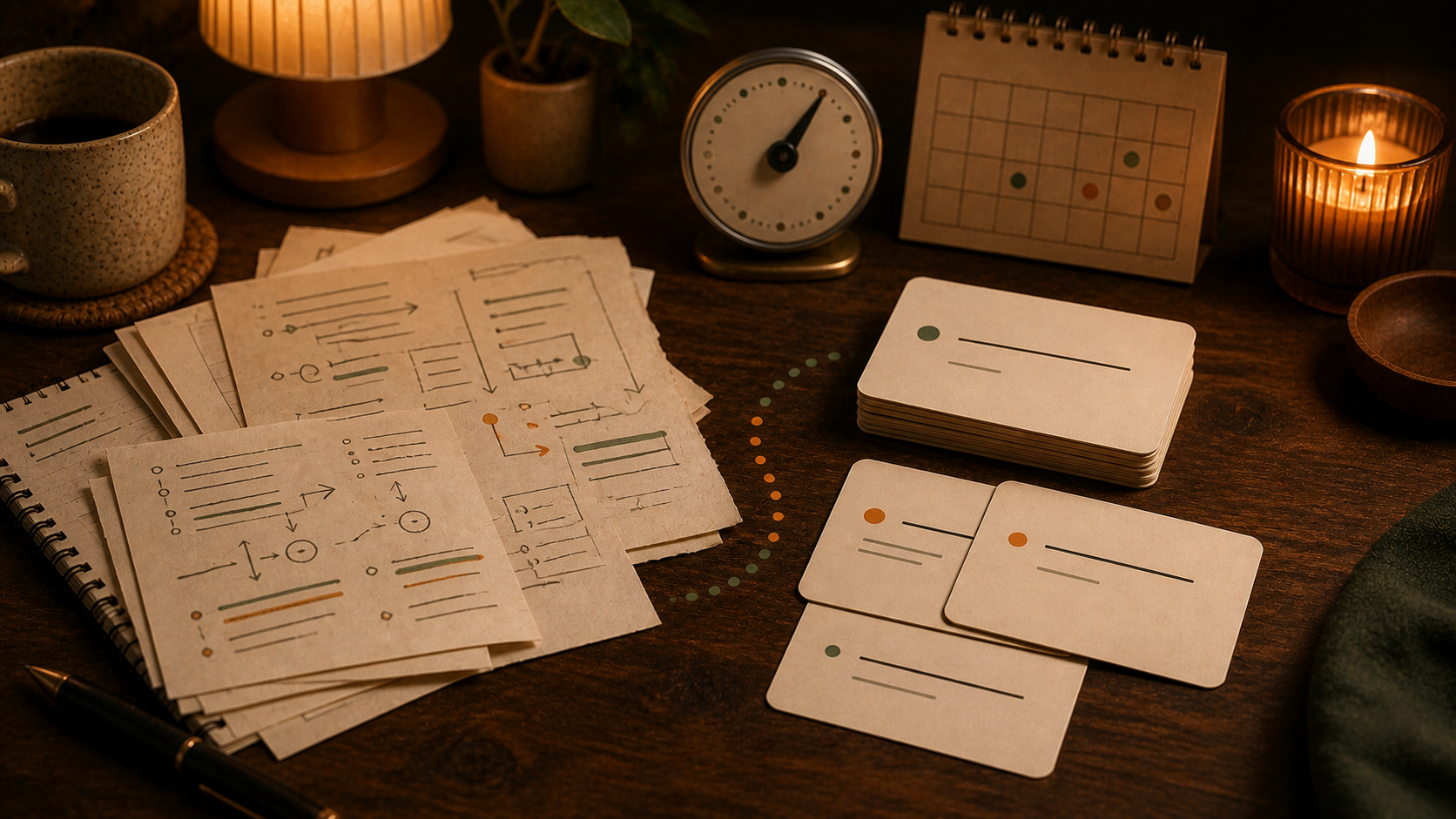
Too early feels productive. Too late feels responsible. Both can waste time.
Making flashcards too early usually means typing while the material is still half-baked.
You have seen the term once. The diagram still feels vague. The lecturer is moving. The textbook section is not finished. So the cards come out sounding like this:
- "What is the main idea of chapter 4?"
- "Why is this concept important?"
- "How does this process work?"
Those are not really flashcards. They are placeholders for understanding you do not have yet.
Waiting too long creates a different mess. Two or three days later, the material feels familiar enough that everything starts to look equally important. You stop remembering which parts actually tripped you up. The result is often a bloated deck built from summaries instead of memory friction.
That is why when should you make flashcards is not a trivia question. It changes the quality of the deck.
The best moment is right after one useful chunk makes sense
I would not build cards during the first skim, and I would not save all card creation for a giant weekly catch-up session either.
The sweet spot is usually:
- after one lecture section
- after one textbook subsection
- after one solved problem set
- after one short AI tutoring session on a specific topic
- after reviewing one batch of missed questions
In other words, make cards after understanding arrives, but before the memory trail goes cold.
That timing works because you still remember what was confusing ten minutes ago:
- the definition that kept blending into another one
- the formula condition you almost skipped
- the wrong answer choice that looked tempting
- the example that finally made the abstract rule make sense
Those are exactly the details that turn into good cards.
During the first pass, capture rough material instead of final cards
If the first pass is not the right moment for polished cards, it still needs a job.
Use that first pass to collect raw material:
- rough notes
- short highlights
- "I do not get this yet" markers
- missed steps in a problem
- quick screenshots or copied lines worth checking later
That keeps the learning flow intact.
Then, once the chunk makes sense, turn only the best parts into cards.
This is where people make card creation harder than it needs to be. They think the choice is either making flashcards live while learning or rereading everything later and building the deck from scratch.
There is a calmer middle path. Capture first. Convert second. Keep the gap short.
If you need a clock-based rule, same day is usually right
Some people still want an actual timing rule, which is fair.
If I had to make it concrete, I would usually create the cards:
- the same day as the lecture or reading
- after a short break, once I can explain the section in plain language
- before I start a completely different study block
Not necessarily immediately.
But usually not tomorrow night if today is still available.
That is the version of make flashcards after lecture that holds up best. Let the material settle a bit, then turn the sharp parts into cards while you still remember where the confusion was.
AI changes the speed of drafting, not the timing rule
This question matters even more now because students use AI for coursework constantly.
The hard part is no longer "can software turn this into cards?" It obviously can. The harder part is deciding when the software should touch the material at all.
If you use AI too early, it helps you mass-produce cards from text you have not really understood yet. That feels efficient right up until review starts.
The better sequence is:
- learn the chunk
- mark what still matters
- paste that narrow material into AI chat or attach the relevant file
- ask for simple front/back drafts
- cut, split, or rewrite the weak cards
- review the survivors with FSRS
That is a much better AI flashcard workflow than pasting an entire chapter into a model and hoping the quantity means progress.
If you want the broader AI-study version of this idea, How to Use AI to Study in 2026 is the direct companion.
Different study situations need slightly different timing
The rule stays the same, but the exact moment shifts a little depending on the source.
For lectures, I would usually make cards after class or after the day's lecture block, not while trying to listen and type at the same time.
For textbook reading, finish one subsection first. A section that ends at a natural boundary is much easier to turn into cards than a half-read explanation.
For AI tutoring, do not export the whole conversation. Make cards after the session from the parts you missed, corrected, or had to ask twice.
For problem-based subjects, I would often wait until after checking the worked solution. The best cards usually come from the step, exception, or pattern you got wrong, not from the whole question stem.
For memorization-heavy material like vocab, anatomy labels, or laws, the delay can be shorter because the chunk becomes clear faster.
For concept-heavy material, the delay should be a little longer because a fast card built on shallow understanding becomes dead weight later.
Do not turn your notes into a second textbook
A lot of timing mistakes are really note-volume mistakes.
People take notes, then turn nearly every line into a card, then wonder why the deck feels like clerical work.
The point of the notes is not to become a sacred intermediate artifact. The point is to help you notice what deserves retrieval.
When I look at notes before making cards, I am mostly searching for:
- facts I would otherwise mix up
- definitions that need exact wording
- comparisons that matter in practice
- steps that are easy to skip
- errors I already made once
I am not trying to preserve every sentence.
That is also why make flashcards after notes is only half the rule. Yes, notes first is often good. But only if the notes help you choose, not hoard.
If card quality is the bigger problem for you, How to Make Better Flashcards in 2026 goes deeper on what should survive that selection pass.
Smaller card sessions beat giant weekend deck-building
I understand the appeal of the big catch-up session. It feels organized. It looks serious on a calendar.
It also tends to produce worse cards.
By the weekend:
- the weak spots are fuzzier
- the urgency is lower
- the material from different days starts blending together
- every summary line looks equally worthy
Small, boring card sessions are better.
Ten or fifteen minutes after a lecture block is usually enough to keep the deck moving without turning study time into data entry. That rhythm also makes it easier to notice when a lecture produced almost no good cards, which is a useful signal by itself.
Some material is meant for problem solving, discussion, or writing, not for permanent flashcards.
Stable decks and tags make the timing easier to keep
Timing problems often get blamed on motivation, but sometimes the real problem is structure.
If every study session ends with "where should these cards live?" you are adding friction exactly where speed matters.
I would keep deck structure boring and stable:
- one deck per course or subject
- maybe a separate deck only when the material truly lives apart
Then use tags for the moving pieces:
- lecture number
- chapter
- weak area
- exam block
- "needs-check" for anything you want to verify later
That setup makes same-day card creation easier because you are not redesigning the library every time. It also makes filtered review more useful later when one topic starts slipping.
The deeper organization trade-offs are in How to Organize Flashcards in 2026.
FSRS helps most when the cards enter the queue at the right time
This is where timing meets scheduling.
FSRS is excellent at deciding when a good card should come back. It is not a repair tool for cards created at the wrong moment.
If the card was made too early, the wording will usually be vague because the concept was still vague.
If the card was made too late, the content will usually be bloated because you no longer remember what really mattered.
When the timing is right, FSRS gets better material to work with:
- cleaner prompts
- shorter answers
- fewer duplicates
- clearer grading during review
That makes the whole review layer lighter.
If your queue already feels heavy, How Many New Flashcards Per Day in 2026 and How to Review Flashcards Faster in 2026 fit well after this article.
A workflow that holds up during a normal week
This is the version I would actually trust:
- Go through the lecture, reading, or practice set without trying to finalize cards live.
- Mark the parts that were hard, important, or easy to confuse.
- Once the chunk makes sense, spend a short same-day block turning only those parts into cards.
- Use AI chat only on that smaller selection, not on the whole pile.
- Put the final cards into the right deck, add useful tags, and move on.
- Let FSRS bring them back instead of rereading the whole source tomorrow.
Nothing fancy there.
That is the point.
Where Flashcards fits this workflow
Flashcards works well for this timing because the app covers the narrow moment between "I understood this" and "now I need clean cards before the details drift."
You can:
- paste plain text or attach a relevant file to AI chat
- draft or rewrite front/back cards
- create the final cards in the same workflow
- organize them with decks, tags, and filters
- review them with FSRS later
- keep going from offline-first clients when you are away from your desk
That matters because good timing is partly about low friction. If the gap between understanding and card creation is annoying, people delay it. Then the deck gets worse.
So when should you make flashcards?
After the material clicks.
Not during the first confusing pass. Not three days later when everything has turned into generic summary mush.
Make them after one small chunk makes sense, while your mistakes still have names and your examples still feel specific. That is usually when the cards get shorter, the deck stays smaller, and FSRS has something worth scheduling.