Why Flashcards Don't Work in 2026: 5 Reasons You Keep Forgetting What You Review
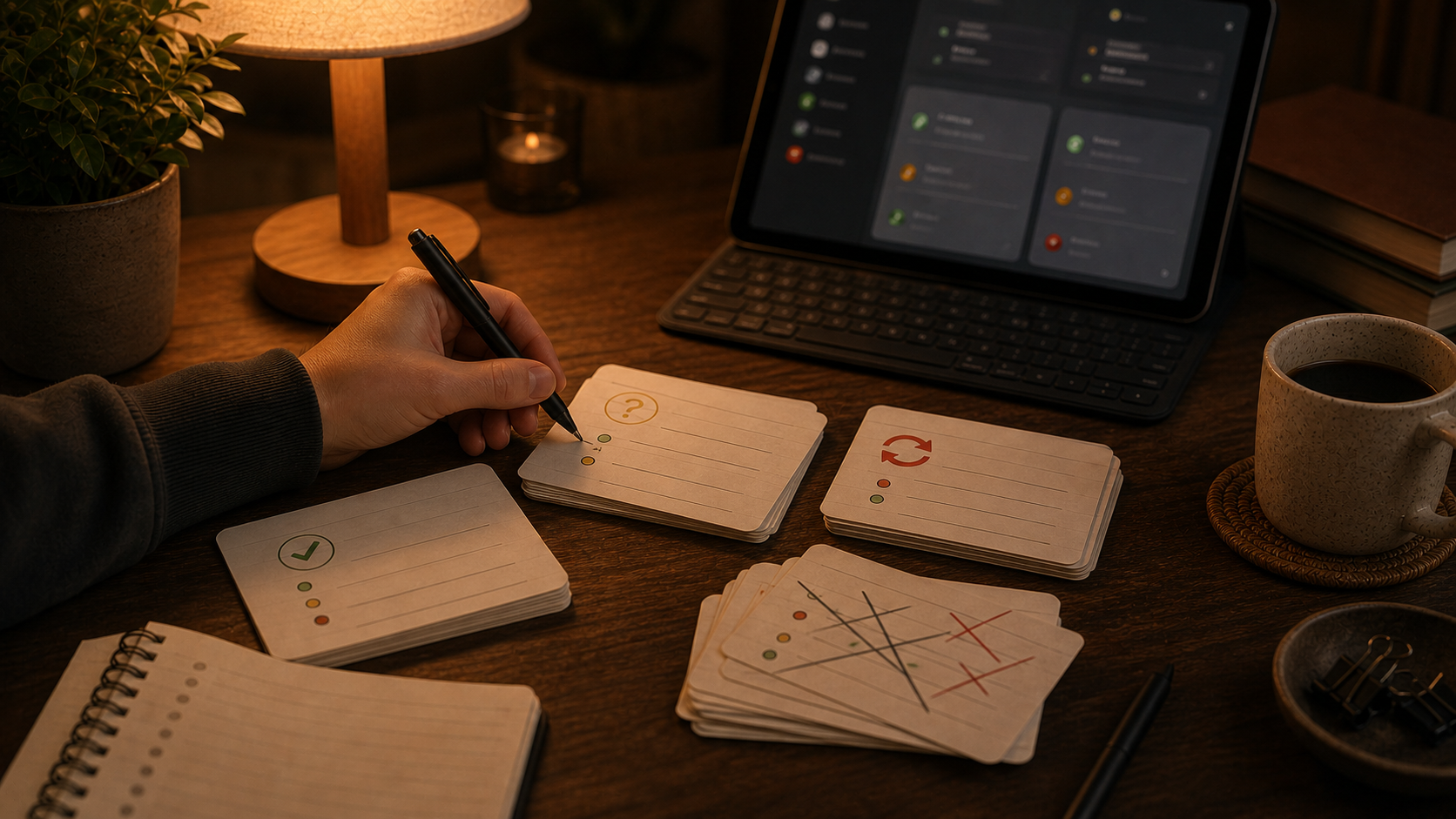
Tuesday night, 63 due cards, 14 fresh ones from an AI draft, and by card 11 everything looked familiar while almost nothing came out cleanly. That is usually when people start searching why flashcards don't work.
The annoying part is that flashcards often fail in ways that look like discipline problems from the outside. You think you need more willpower, more consistency, more reviews, another app, a smarter scheduler. Usually the problem is less dramatic than that.
Flashcards stop helping when the deck quietly turns into recognition practice, oversized cards, repeat offenders, and a daily workload you cannot finish honestly. Sometimes there is a fifth problem underneath all that: you are using cards for a skill that needed more problem practice than memorization.
If your real complaint is flashcards not working, I would check these five boring causes first:
- you recognize the topic but cannot produce the answer
- the cards are too big, too vague, or too AI-bloated
- the same bad cards keep coming back because they were never fixed
- the review load is too high for clean recall and honest grading
- you are trying to turn applied practice into pure card review
That is the diagnosis this article is built for.
Flashcards usually fail before the scheduler does
People love arguing about apps, algorithms, and study methods. Fine. Those things matter a little.
Most of the time, though, why am I forgetting flashcards has a much simpler answer: the deck is asking the wrong kind of question, or too many of them, or both.
FSRS can schedule a good card well. It cannot turn a muddy card into a good one. It also cannot protect you from a pile of weak cards you never should have kept.
That is why I would diagnose the deck before I blame spaced repetition itself.
Recognition is doing the work
This is the most common failure mode. You see the front side and think, "Yeah, I know this." Then you try to answer without peeking and realize what you really have is topic familiarity, not retrieval. That gap explains a lot of flashcards not helping me remember.
Recognition feels good because the card already gives your brain a lot of support:
- the wording sounds familiar
- the topic is obvious from the front
- you remember the notes, lecture, or AI chat around it
- the answer seems easy once you see the first word
Real recall is stricter. It asks whether you can produce the answer before the card rescues you.
If you want the deeper study-method version of that distinction, Active Recall vs Spaced Repetition in 2026 covers it directly. The short version is simple: if the card mostly helps you recognize, it will feel smoother than it actually works.
Two good warning signs:
- you "knew it" as soon as you flipped the card
- the next day you cannot explain the same point without support
First repair:
- say the answer out loud or type it before flipping
- prefer short free-response prompts over fronts that contain half the answer
- rewrite vague prompts that rely on memory of the original source
If the front says "Why was this important?" or "What happened here?" the card is already leaning on recognition. Tired future-you should understand the prompt without reopening the whole chapter in your head.
Your cards are trying to do too much
This is where a lot of modern decks go wrong. The cards are not exactly false. They are just too big to review cleanly.
One card asks for:
- the definition
- the exception
- the mechanism
- the comparison to a nearby concept
- one example because the AI felt generous
That is not one retrieval target. That is a small oral exam.
This is a big reason people search why do I keep forgetting flashcards after a week of apparently productive card generation. The cards never had a fair chance to stick because each review required too much judgment and too much recall at once.
AI speeds this up. You upload notes, a PDF, or a study guide, and suddenly the deck is full of polished paragraphs and broad prompts. The draft looks complete. The review experience is awful.
The usual symptoms are easy to spot:
- the back side reads like notes instead of an answer
- the front asks for "causes and effects" or "steps and exceptions"
- three cards test the same idea with slightly different wording
- the card only makes sense if you still remember the original page
Start here:
- delete weak cards faster than feels polite
- split any card that tests more than one thing
- shorten answers until grading becomes obvious
These companion articles go deeper on the repair side:
- How to Fix AI Flashcards in 2026
- How to Make Better Flashcards in 2026
- What Should Go on a Flashcard in 2026
This article is the diagnostic version: if your reviews feel heavy, bloated cards are one of the first things I would inspect.
Leech cards keep charging rent
A leech card is the one you keep missing, dreading, or half-answering over and over.
People often treat that like proof they are bad at memory. Usually it means one of three things:
- the card is badly written
- the card is testing too much at once
- the underlying concept is still not understood well enough to memorize cleanly
That last one matters more than people admit.
Some material is not ready to become a flashcard yet. If you still need a full explanation, worked example, diagram, or teacher walkthrough to understand what the answer even means, the card is early.
The fix is not more stubborn reviews. The fix is to decide which kind of leech it is:
- rewrite it if the idea matters but the wording is broken
- split it if the answer contains several moving parts
- suspend or delete it if it is low-value
- move back to notes, examples, or practice questions if understanding is the real gap
This is where people accidentally turn spaced repetition into punishment. They keep feeding the same broken card into the queue and calling the result "hard but worthwhile."
Sometimes hard is worthwhile. Sometimes the card is just bad.
The queue got heavier than your week
You can build a deck that fails even if every individual card looks decent. The failure mode is workload.
Daily reviews creep up. New cards keep coming in. You start grading faster just to survive. Then honesty drops, recall gets sloppier, and the deck stops feeling like a memory tool.
That is where FSRS review load becomes part of the diagnosis.
FSRS helps by scheduling cleaner repetitions than older systems. It still depends on a workload you can actually finish without turning each session into triage.
The usual signs:
- your due count grows even when you are showing up
- you tap through cards because you want the number down
- you keep adding new cards from AI drafts faster than you can absorb them
- you feel behind even on days when you studied
At that point, asking "Why are flashcards not working?" is often the wrong level of abstraction.
The more useful question is: "Did I build a review load that my normal week can carry?"
First move:
- cut new cards before you blame motivation
- trim weak cards so the queue reflects real priorities
- keep due reviews boring and finishable
If the load itself is the issue, these are the better next reads:
Some material wants reps, not more cards
This one causes quiet disappointment.
People turn every weak area into flashcards, even when the real skill is:
- solving problems
- explaining a process
- working through a case
- writing code
- applying a rule under pressure
Flashcards help with facts, distinctions, steps, definitions, formulas, and repeated confusions. They do not replace doing the thing.
If you are forgetting because you never practiced the larger skill outside the card, the deck will feel thin no matter how often you review it.
That does not make flashcards useless. It just means they need a narrower job.
I like using cards to preserve:
- the step I always skip
- the definition I keep mixing up
- the formula condition I keep dropping
- the contrast between two similar ideas
- the exact mistake I do not want to repeat
That is also why the most useful AI study workflows now keep the misses instead of saving the whole session. How to Make a Practice Exam From Your Notes With AI in 2026 follows that pattern: quiz first, then keep only the weak spots that deserve long-term review.
A fast diagnosis table
If you want the short version, use this:
| Symptom | Likely problem | First change |
|---|---|---|
| The card feels easy, but you forget it tomorrow | Recognition instead of recall | Answer before flipping and rewrite vague fronts |
| One card takes too long to grade | Card is overloaded or wordy | Split it or shorten the back |
| The same card keeps coming back and annoying you | Leech card | Rewrite, suspend, or move the concept back to notes |
| You are studying daily and still feel buried | Review load too high | Cut new cards and delete low-value cards |
| AI decks look impressive but review badly | Too many candidates became real cards | Prune hard before scheduling them |
| You miss applied questions even after card reviews | Cards replaced practice instead of supporting it | Do more problems and save only the misses |
That is most of the story behind flashcards not working.
Most broken decks light up more than one row at once.
What I would change this week
If your deck feels broken right now, I would not do a huge reset this weekend. I would do a small hard cleanup.
- Stop adding new cards for a few days.
- Review one ordinary session and mark every card that felt vague, slow, or irritating.
- Delete the low-value cards immediately.
- Split or rewrite the small number of cards that matter.
- Suspend repeat offenders that still do not make sense after one edit.
- Keep only the weak spots from new AI study sessions instead of importing whole drafts.
That is enough to tell you whether the problem is the method or the deck.
Usually it is the deck.
Where Flashcards helps
Flashcards is useful here after the diagnosis, not instead of it. Keep the survivors as plain front/back cards, organize them by deck or tag, and let FSRS handle the timing once the cards are actually worth reviewing. If you want AI help, use it for drafting and cleanup, not as permission to dump every candidate card into your live queue.
It still will not delete weak cards for you, fix leeches for you, or decide which topics needed real practice instead of more memorization. No app can do that part honestly.
If you are setting that workflow up for the first time, Getting Started is the short path. If you want your own deployment later, the self-hosting guide and API docs are there.
When people say flashcards do not work, they usually mean the current deck is asking the wrong question, asking too much, or asking too often. Fix that, and the method starts looking a lot less mysterious.