Spanish Flashcards in 2026: Vocabulary, Gender, Verbs, and Useful Phrases
el problema ends in -a but is masculine. la mano ends in -o but is feminine. Two ordinary nouns are enough to break a Spanish card that stores only problem = problema or hand = mano.
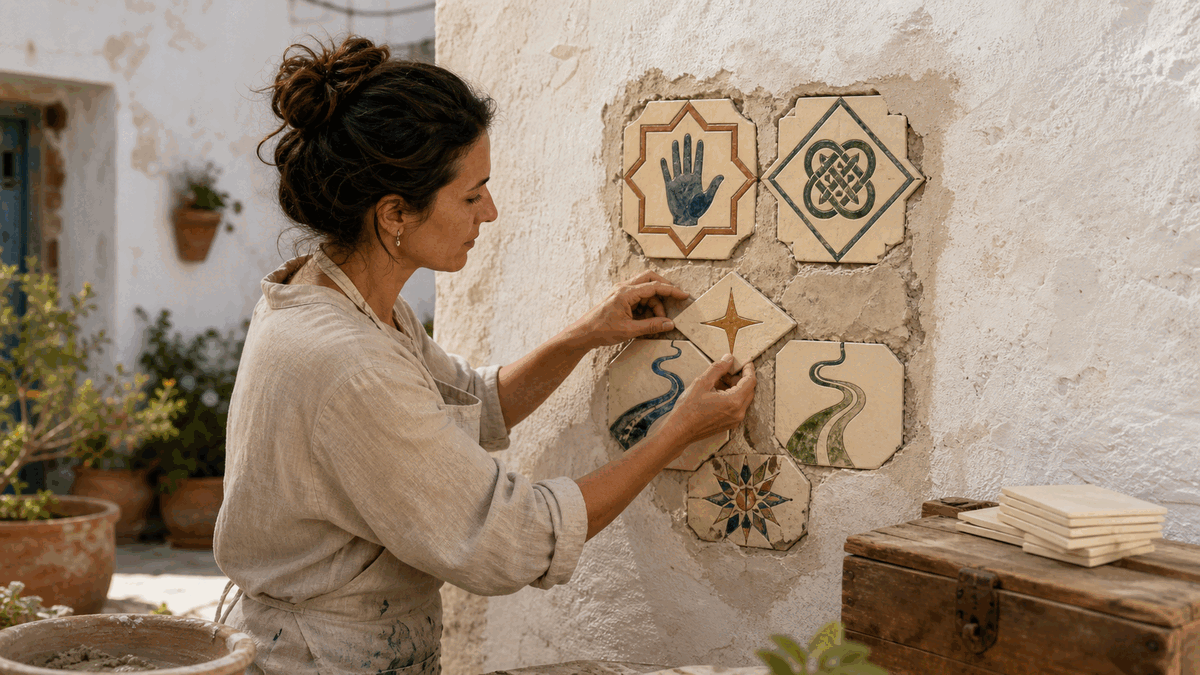
Useful Spanish flashcards keep the part you will need later: the article with a noun, one verb form in a clear situation, the accent that changes the answer, or the exact phrase used in your course. Build them in small batches from Spanish you are already reading, hearing, or trying to say. That gives the deck a job. It also leaves full conversations, listening, reading, and writing where they belong: outside the deck, in real Spanish.
First, pick the Spanish you are studying
Spanish does not fit neatly into one anonymous “neutral” deck. Vocabulary, pronunciation, forms of address, and everyday constructions vary across places and speakers. When a deck mixes several sources without labels, legitimate variants start looking like mistakes.
Choose one reference variety that matches your course, teacher, destination, family, or main media source. This is simply a study boundary. You can recognize and add other varieties later without forcing yourself to produce all of them at once.
Record a little context with each batch of cards:
Reference variety: the variety taught in my course
Primary source: course Unit 3
Secondary source: teacher corrections
Checked: 2026-08-10
The Instituto Cervantes reference-level index is a useful map. It separates A1-A2, B1-B2, and C1-C2 material, with distinct inventories for grammar, pronunciation, orthography, communicative functions, and lexical notions. It is a reference framework, not a premade deck or a checklist to import line by line.
When a usage question crosses regions, check a pan-Hispanic source. The Diccionario panhispánico de dudas addresses common current questions about pronunciation, spelling, plurals and feminine forms, conjugation, syntax, and vocabulary while respecting usage variants across the Spanish-speaking world. Your course can still set the form you are expected to produce.
Give the deck a real boundary
A giant alphabetical word list has no natural stopping point. One situation and one source do.
The Instituto Cervantes A1-A2 objectives include basic transactions for immediate needs, simple exchanges in shops and transport, and information about daily activities and personal topics. Its A1-A2 specific notions organize vocabulary around concrete areas such as personal identity, family, food, shopping, health, and daily actions.
That gives you several sensible boundaries for a first deck:
- ordering and paying for food
- introducing yourself and talking about family
- asking for directions and using transport
- describing your daily routine
- preparing for the next lesson or conversation already on your calendar
Pick one situation. Then collect words and chunks from one lesson, a short article, or a transcript you are allowed to use. A card earns its place when it helps with that situation or repairs a real miss. “Might be useful someday” is a weak reason to review something for months.
This is the Spanish-specific version of the broader language-learning flashcard workflow: context first, card second. If a source begins as class or reading notes, turn the notes into flashcards selectively instead of converting every sentence.
Put the article on the noun card
For a Spanish noun, the article is part of the memory target. The English translation usually cannot tell you the noun's grammatical gender.
A recognition card can stay simple:
Front: In my Unit 2 list, what does “la mano” mean?
Back: the hand
      Gender: feminine
      Phrase: Me duele la mano. — My hand hurts.
      Source: Unit 2; checked in the RAE dictionary
For active recall, asking only for hand leaves the article out. Put the noun inside a sentence and name the source boundary:
Front: Complete with the Unit 2 noun and article:
       Me duele ___ ___ .
       Meaning: My hand hurts.
Back: la mano
The same pattern catches endings that invite a bad guess:
Front: Complete the sentence with “a problem”:
       Tenemos ___ ___ con la reserva.
Back: un problema
      Dictionary form: el problema (masculine)
The RAE dictionary identifies mano as feminine and problema as masculine. The example sentences here are original. They make gender part of the answer instead of leaving it as a small m. or f. note that is easy to skip.
One noun card does not need the singular article, plural, translation, three meanings, a pronunciation note, and two idioms. Add a separate plural or agreement card when the course requires it or a mistake shows that you need it. The guide to making better flashcards applies here: one clear decision is easier to answer and repair.
Ask for one verb decision at a time
A conjugation table is useful as a reference. On the back of one card, it turns a quick review into a recital.
Make the front specify the subject, time, verb, and enough situation to support one answer:
Front: Complete the exact Lesson 5 sentence about yesterday's completed trip:
       Ayer ___ al mercado y compré pan. (ir, yo)
Back: fui
      Full sentence: Ayer fui al mercado y compré pan.
      Source: Lesson 5
That is one constrained recall. You can grade it without wondering whether the target was the infinitive, a present form, a past form, or the whole paradigm.
Past-time wording alone does not always settle Spanish tense or aspect. If your source contrasts a past habit with a completed event, keep the contexts precise and use separate cards:
Front: Complete the course sentence about a repeated habit in a finished period:
       Cuando vivía en Sevilla, ___ al mercado todos los sábados. (ir, yo)
Back: iba
      Full sentence: Cuando vivía en Sevilla, iba al mercado todos los sábados.

Front: Complete the course sentence about one completed trip yesterday:
       Ayer ___ al mercado. (ir, yo)
Back: fui
      Full sentence: Ayer fui al mercado.
Here the imperfect iba presents a repeated past habit, while the preterite fui presents one completed trip. Use the terminology taught by your course, and copy its intended context. A prompt such as conjugate ir is too broad; Yesterday: ir can still be too thin. Most Spanish verb flashcards should ask for one person, one form, and one meaningfully constrained cue.
When the contrast itself is the target, you can place both examples on the back of a dedicated explanation card. Keep production cards smaller. Otherwise, one review score ends up hiding whether you missed the subject, the stem, the ending, or the choice of tense.
Save phrases that do a job
English-to-Spanish reverse cards become vague quickly. bill can mean a restaurant check, proposed law, banknote, invoice, or an animal's beak. Even I would like can have several natural Spanish answers.
Ask for a phrase with a communicative job and a source boundary:
Front: Use the exact restaurant phrase from Lesson 4 to ask for the bill.
Back: La cuenta, por favor.
      Function: requesting the bill
      Source: Lesson 4
Or retrieve the chunk inside a short exchange:
Front: Camarero: ¿Algo más?
       Cliente: No, gracias. ___ ___, por favor.
Back: La cuenta
These are still Spanish vocabulary flashcards, but the unit being remembered is a usable chunk. The Cervantes framework gives communicative functions—asking for information, confirming, describing, expressing an opinion, requesting something—their own inventory. A practical deck can follow that lead.
Useful phrase categories include:
- asking someone to repeat or slow down
- checking that you understood
- ordering, paying, or asking for a recommendation
- accepting or declining an invitation
- giving a reason and changing a plan
- buying time while you think
“What do you say at a restaurant?” has dozens of good answers. “Use the phrase from Lesson 4 to ask for the bill” has one expected answer. Source boundaries matter even more for politeness and forms of address, because the best wording depends on the speaker, relationship, and region.
Test the accent when the accent is the target
If written Spanish matters, the prompt should say when exact spelling is being tested. That makes an accent a gradeable part of the answer rather than a detail you forgive after every review.
The Instituto Cervantes A1-A2 orthography inventory includes general accent rules, accents on interrogatives and exclamatives, opening and closing punctuation, and contrasts such as él/el, té/te, sé/se, and tú/tu.
Turn one contrast into one decision:
Front: Add the correct form of el/él:
       ___ está aquí. — He is here.
Back: Él
      Accent required: pronoun meaning “he.”
For a correction card, state that punctuation and spelling are both being tested:
Front: Correct the spelling and punctuation:
       Como te llamas?
Back: ¿Cómo te llamas?
      Check: opening question mark and accent on cómo.
The same Cervantes inventory uses ¿Cómo te llamas? as an example, so the correction above follows the cited source directly. Ordinary meaning cards can stay focused on meaning. Add exact-production cards for spellings and accents that matter in your writing or repeatedly go wrong.
Pronunciation needs a similar boundary. The Cervantes A1-A2 pronunciation inventory covers stress, rhythm, sounds, connected speech, and variation across Spanish varieties. A text card can preserve a sound-spelling distinction or remind you which syllable is stressed. It cannot judge whether you produced the sound clearly. Say the word, compare it with a trusted recording or teacher, and return to unfamiliar speech.
Label regional variants instead of creating false errors
Suppose your Spain-based course uses el ordenador, while an interview you are studying uses la computadora. The RAE dictionary marks the computer sense of ordenador as used in Spain. Its computador, computadora entry records both the masculine and feminine nouns for the electronic machine.
Do not merge them into a reverse card that asks only for computer and punishes a valid answer. Give each card a boundary:
Front: In my Spain-based course, what noun and article mean “computer”?
Back: el ordenador
      Variety/source: Spain; Course Unit 1

Front: In the interview transcript I am studying, which form did the speaker use?
Back: la computadora
      Variety/source: [speaker and source]
The bracket in the second card is a field to complete from the actual interview. It should not survive as fake evidence in a finished deck.
You do not need a production card for every regional synonym you encounter. Keep the form you plan to use, tag another form when comprehension matters, and add a contrast after it causes confusion. A regional label is information, not a ranking.
Turn real misses into narrow repair cards
Listening practice should begin with audio, not a transcript. Conversation practice should involve another speaker, not silent recognition on a screen.
After the larger task, a narrow card can keep the missed clue available:
Front: In the bakery recording at 01:14, what phrase did the customer use
       to ask the clerk to repeat?
Back: ¿Me lo puede repetir, por favor?
      Miss: I recognized repetir in writing but not in the sentence.
      Source: [recording title and link]
Complete the source field from the recording, answer the card, and replay the line. Later, listen for the phrase in unfamiliar audio. The text review preserves the expression. Speed, connected speech, turn-taking, and attention across a conversation still need listening and conversation.
A speaking correction can become a card too:
Front: Teacher correction from 2026-08-08:
       Complete the exact phrase used to talk about age:
       ___ treinta años.
Back: Tengo
      Full phrase: Tengo treinta años.
Keep the teacher's correction or source note. AI can draft a cleaner prompt from it, but fluent-looking Spanish is not proof that the form is correct for your intended meaning and variety.
When one card fails repeatedly, more exposure to the same vague prompt rarely fixes it. Check the source, narrow the cue, split mixed targets, or add the exact contrast you missed. The leech-flashcard repair guide gives that cleanup process in detail.
Keep the review queue smaller than the source pile
Importing 500 cards before finishing the first week of reviews gives you a large obligation before you have a useful habit. Every new card feeds the future queue—including ambiguous translations, low-value words, and forms from varieties you did not plan to produce.
Start with a small batch from one active source. Review due cards before adding more. When reviews begin taking time away from reading, listening, writing, or conversation, reduce new cards and clean the deck you already have.
FSRS can schedule clear cards from review history. It cannot decide whether computer should retrieve ordenador, computador, or computadora; verify a sentence; hear your pronunciation; or notice that a reverse prompt accepts several answers. Those are card-design and language questions.
Set daily intake from the review time you can actually protect. How many new flashcards per day explains how to find a sustainable rate without pretending one number works for everyone.
A weekly workflow that still leaves time for Spanish
Here is a practical starting rhythm:
- Choose one situation and source. Use one lesson, short reading, or authorized transcript in your reference variety.
- Collect a few candidates. Favor nouns with articles, one-form verb decisions, useful chunks, and mistakes that affected comprehension or production.
- Verify before saving. Check the course, teacher, dictionary, or cited source. Add the source and variety when either controls the answer.
- Review what is due. Say or write the answer before revealing it. Grade the requested target, including the accent when exact spelling is the job.
- Use Spanish away from the cards. Read something new, listen without the transcript, write a message, or have a conversation.
- Turn useful misses into repair cards. Preserve one distinction or correction rather than copying the whole exercise.
- Clean the deck once a week. Delete duplicates, split overloaded cards, and suspend material that no longer matches your goal.
That loop gives Spanish spaced repetition a supporting role. The deck keeps small corrections and useful language available. Real Spanish supplies fresh context, time pressure, and feedback.
Where Flashcards Open Source App fits
Flashcards Open Source App covers the review layer of this workflow. It supports front/back cards, decks and tags, FSRS due reviews, AI-assisted card creation, offline study and sync across web, iOS, and Android, portable imports and exports, and an open-source self-hosting path.
One simple setup is:
- decks for the situation or main source, not every grammar label
- tags such as
noun-gender,verb-form,phrase,accent,listening-miss, andvariety-spain - source and variety notes on the back when they control the answer
- FSRS review after each prompt is clear enough to grade
AI can help draft a card or tighten its wording from material you provide. You still decide what gets saved and verify the Spanish. The app does not provide an official Spanish course or official premade Spanish deck, native-speaker audio for the examples in this article, pronunciation scoring, conversation practice, or automatic validation of grammar and regional usage.
The hosted app is free during the current beta, with AI and sync included, and self-hosting is available. See Getting Started for the hosted, mobile, agent, and self-hosted paths. If you are comparing a vocabulary-course product with a user-controlled flashcard tool, the Memrise alternative guide explains the difference in workflow.
Spanish flashcards FAQ
Should Spanish vocabulary flashcards show English first?
Use both directions only when both serve your goal. Spanish-to-English cards can support quick comprehension. English-to-Spanish cards test production, but they need a source, situation, or phrase boundary because several answers may be valid. Do not reverse every card automatically.
Should I put a whole conjugation table on one card?
Keep the table as a reference. Use production cards for one person, form, and situation. A prompt such as Ayer ___ al mercado y compré pan (ir, yo) is easier to grade and repair than conjugate ir.
How should I study noun gender?
Store the noun with its article and a short phrase: la mano, Me duele la mano. Test the article inside a sentence when active recall matters. Add plural or adjective-agreement cards when your course requires them or a real mistake shows the need.
How should I handle regional Spanish on flashcards?
Choose one variety for active production and label the source when usage varies. Keep other forms for recognition when they matter to your listening or reading. A reverse card that accepts only one unlabeled answer can turn valid regional language into a false error.
Are flashcards enough for learning Spanish?
No. Flashcards reinforce discrete recall: a word, article, form, spelling contrast, phrase, or correction. They do not replace conversation, unfamiliar speech, connected reading, writing, or feedback from a qualified teacher.
Start with ten traceable cards
Choose one situation you will use this week. Take ten verified items from one source: two nouns with articles, two constrained verb forms, two useful phrases, one spelling or accent contrast, and three cards for other high-value items or real misses.
Label the source and variety where they matter. Review those cards, then return to real Spanish. The useful flashcards for learning Spanish are the small, accurate reminders that help the next conversation, recording, page, or message go a little better.