2026 में TOEFL Flashcards: Vocabulary, नए iBT Task Types और Practice-Test की गलतियाँ
TOEFL deck की सारी अंग्रेज़ी सही हो सकती है, फिर भी वह आपको गलत exam के लिए तैयार कर सकता है। 2026 में उपयोगी TOEFL flashcards context में vocabulary, sentence patterns, मौजूदा 12 tasks के संकेत और official ETS practice में जाँची गई गलतियों पर केंद्रित होने चाहिए। इन front/back cards को FSRS से review कीजिए, फिर timed practice पर लौटिए। Flashcards छोटी-छोटी जानकारी याद से निकालने में मदद करते हैं। वे adaptive Reading और Listening, सिर्फ़ एक बार सुनाया जाने वाला audio, बिना तैयारी के Speaking या पूरे Writing tasks का अभ्यास दोबारा नहीं बना सकते।
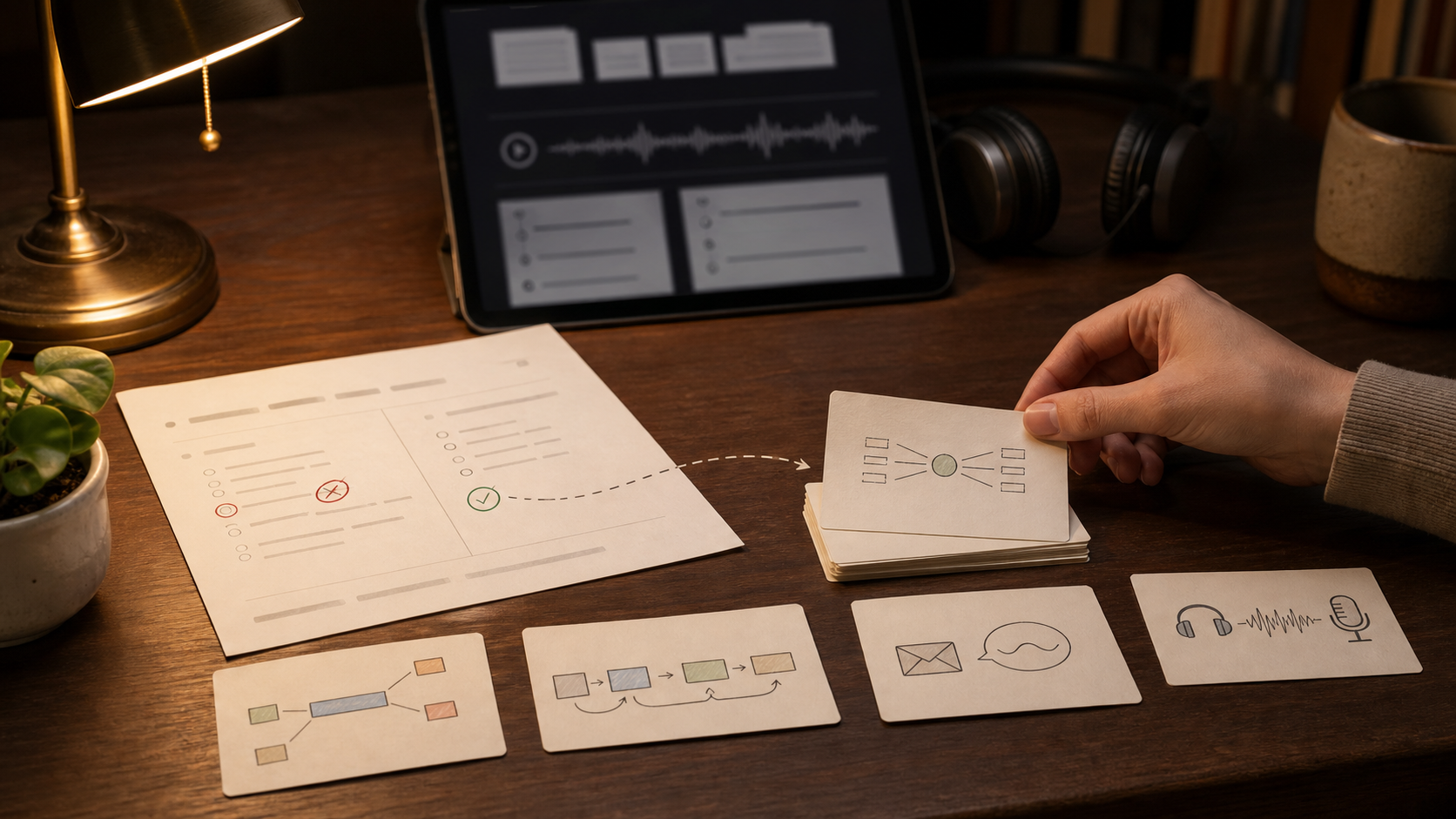
21 जनवरी 2026 से लागू TOEFL iBT format इस्तेमाल करें
ETS ने updated TOEFL iBT को 21 जनवरी 2026 को दुनिया भर में लागू किया। उसके मौजूदा test-content page पर चारों sections में इस्तेमाल होने वाले task types दिए गए हैं। 2026 के test blueprint के अनुसार Reading और Listening का design दो चरणों वाला adaptive है: पहले module में आपका प्रदर्शन यह तय करने में मदद करता है कि दूसरा module कौन-सा होगा। Writing और Speaking linear रहते हैं। ETS ने अपनी बदलाव की घोषणा में इसके बारे में और जानकारी दी है।
Section और overall scores अब आधे अंक के अंतर वाली 1–6 scale पर दिए जाते हैं। ETS overall score का 0–120 scale पर comparable estimate भी जनवरी 2028 तक देता है। किसी पुरानी prep book में दिया conversion याद करने के बजाय हर institution की मौजूदा requirement जाँचिए।
ETS अनुमानित base times प्रकाशित करता है और चेतावनी देता है कि test के adapt होने पर समय और items की कुल संख्या बदल सकती है। इसलिए Reading में हमेशा ठीक X questions होते हैं जैसा card भरोसेमंद नहीं है। Task names, language patterns और आपकी अपनी बार-बार होने वाली गलतियाँ याद रखने के लिए ज़्यादा टिकाऊ targets हैं।
हर मौजूदा TOEFL task के लिए सही memory target चुनें
मौजूदा exam में 12 task types हैं और हर एक का official नाम तय है। यह table याद रखने लायक जानकारी को उस performance से अलग करता है जिसके लिए अब भी realistic practice चाहिए।
| Section और मौजूदा task | याद रखने लायक चीज़ें | जो practice deck के बाहर रहेगी |
|---|---|---|
| Reading: Complete the Words | spelling, word families, suffixes, grammar cues और context से सही word form चुनना | test की pace पर नए paragraphs पूरे करना |
| Reading: Read in Daily Life | purpose, audience, मुख्य details, implied meaning और notices, emails, menus या posts को scan करना | नए formats पढ़ना और सही लगने वाले options के बीच चुनाव करना |
| Reading: Read an Academic Passage | context में vocabulary, ideas के बीच संबंध, rhetorical purpose, inference cues और बार-बार फँसाने वाले patterns | पूरा नया passage पढ़कर उस पर reasoning करना |
| Listening: Listen and Choose a Response | question functions, natural response patterns, negative phrasing और संदर्भ के हिसाब से बेमेल जवाब | छोटी बातचीत एक बार सुनकर तुरंत option चुनना |
| Listening: Listen to a Conversation | speaker का purpose, problem, attitude, implied meaning और अगला संभावित action | अनजान speakers की बात natural pace पर समझना |
| Listening: Listen to an Announcement | schedule में बदलाव, ज़रूरी काम, जगहें, क्रम और संक्षिप्त note-taking symbols | सिर्फ़ एक बार सुनाए गए audio से details निकालना |
| Listening: Listen to an Academic Talk | lecture signposts, main और supporting ideas के बीच फर्क, inference, rhetorical structure और academic vocabulary | समय के दबाव में लगातार सुनना, notes लेना और ideas के बीच फर्क करना |
| Writing: Build a Sentence | word order, clause patterns, agreement, tense, connectors और embedded questions | नए word sets को जल्दी arrange करना |
| Writing: Write an Email | audience, purpose, tone, माँगे गए points, request language और संक्षिप्त openings या closings | नए scenario पर पूरा response लिखना |
| Writing: Write for an Academic Discussion | अपनी position, reason, ठोस support, उपयोगी transitions और बार-बार होने वाली grammar fixes | official time limit में सुसंगत और मौलिक contribution लिखना |
| Speaking: Listen and Repeat | sentence chunks, function words का क्रम और आसानी से छूटने वाले patterns | sentence को एक बार सुनना, उसकी ध्वनि याद रखना और उसे सही व समझ आने लायक तरीके से दोहराना |
| Speaking: Take an Interview | जवाब को लचीले ढंग से बढ़ाना, reason और example जोड़ना, topic language और personal ideas के prompts | बिना तैयारी के साफ़ बोलते हुए natural pace पर जवाब देना |
Task names और descriptions मौजूदा ETS blueprint और specifications से लिए गए हैं। ETS teachers के लिए practice test भी प्रकाशित करता है, जिसमें हर task family के examples हैं। यह PDF 21 जनवरी 2026 से लागू tests के मुताबिक है, लेकिन इसके directions और questions को paper पर इस्तेमाल करने के लिए बदला गया था। Tasks के ढाँचे सीखने के लिए यह उपयोगी है; यह live adaptive interface की नकल नहीं करता।
TOEFL vocabulary flashcards को context और word form के आसपास बनाएँ
सिर्फ़ definition वाला card किसी word से परिचय करा सकता है। Context cards दिखाते हैं कि क्या आप उसका meaning पहचान सकते हैं, सही form चुन सकते हैं और उसे sentence में इस्तेमाल कर सकते हैं।
Definition वाला card:
- Front:
allocate - Back:
to distribute for a purpose— किसी उद्देश्य के लिए बाँटना
Context में अर्थ:
- Front:
The university allocated additional rooms to first-year studentsमेंallocatedका क्या मतलब है? - Back: किसी खास उद्देश्य के लिए दिया या बाँटा गया।
Word form वाला card:
- Front:
allocateका सही रूप इस्तेमाल करके sentence पूरा करें और उसकी word form बताएँ:The committee approved an ______ of funds to the library. - Back:
allocation—anके बाद औरofसे पहले आने वाला noun।
खुद इस्तेमाल करने वाला card:
- Front:
allocateका सही रूप इस्तेमाल करके यह sentence पूरा करें:The department will ______ more funding to laboratory safety. - Back:
allocate.
एक ही word के हर तरह के card की ज़रूरत शायद ही पड़े। उसे दूसरी तरह से पूछने वाला card तब जोड़िए जब practice में उसका जवाब बार-बार गलत हो, आप उसे पहचानते हों लेकिन इस्तेमाल न कर पाते हों, या उसकी word family बार-बार गलती कराती हो। Sentence इतना छोटा रखिए कि रटा हुआ paragraph पहचानने के बजाय जवाब याद से निकालना पड़े।
अगर collocations, sentence cards और productive vocabulary के लिए व्यापक तरीका चाहिए, तो 2026 में भाषा सीखने के लिए Flashcards का इस्तेमाल कैसे करें उस layer को समझाता है, बिना हर example को किसी exam से बाँधे।
Sentence patterns को छोटे production cards में बदलें
Build a Sentence सीधे sentence structure जाँचता है। यही patterns समय के दबाव में email या academic discussion को साफ़ रखने में भी मदद करते हैं।
अच्छे cards में आपको structure खुद बनाना पड़ता है:
-
Front: इन chunks को सही क्रम में लगाइए:
asked / whether / the deadline / Mia / had changed -
Back:
Mia asked whether the deadline had changed. -
Front: Embedded question सही कीजिए:
Could you tell me where is the advising office? -
Back:
Could you tell me where the advising office is? -
Front: इन ideas को concession दिखाते हुए जोड़िए:
Online classes are flexible. Some students need more direct interaction. -
Back:
Although online classes are flexible, some students need more direct interaction. -
Front:
Could you confirm whether ...?construction इस्तेमाल करके विनम्र और स्पष्ट रूप से पूछें कि workshop सुबह 9:00 बजे शुरू होती है या नहीं। -
Back:
Could you confirm whether the workshop begins at 9:00 a.m.?
Back पर एक साफ़ answer या सही माने जा सकने वाले answers का बहुत छोटा set रखिए। पूरा email एक card के लिए बहुत बड़ा है और उसे ईमानदारी से grade करना मुश्किल होगा।
Write an Email और Write for an Academic Discussion के लिए पूरे scripts की जगह checklist prompts इस्तेमाल कीजिए:
- Audience कौन है और उसके लिए कौन-सा tone सही रहेगा?
- Prompt में माँगा गया कौन-सा point मैंने अभी तक शामिल नहीं किया?
- कौन-सा ठोस reason या example मेरी position को support करता है?
- मेरी timed writing में कौन-सी grammar error बार-बार होती है?
Topic बदलने पर भी ये prompts उपयोगी रहते हैं। रटे हुए पूरे responses अक्सर अटपटे लगते हैं।
Task-strategy cards को specific रखें
कुछ गलतियाँ language gap दिखाती हैं। कुछ दूसरी गलतियाँ बताती हैं कि आपने task के अंदर गलत कदम चुना। दूसरी तरह की गलती को strategy card में तभी बदलिए जब lesson किसी जाँची हुई गलती से आया हो और आगे फिर काम आए।
उदाहरण:
-
Front: Read in Daily Life में छोटी details देखने से पहले क्या पहचानना चाहिए?
-
Back: Text का purpose, audience और format।
-
Front: Listen and Choose a Response में कोई option prompt का word दोहराने के बाद भी गलत क्यों हो सकता है?
-
Back: वह speaker की ज़रूरत के मुताबिक जवाब नहीं देता, जैसे बात की पुष्टि करना, सुधारना, समझाना या सवाल का जवाब देना।
-
Front: पिछली बार academic talk में मैंने किस चीज़ को main idea समझ लिया था?
-
Back: मैंने main claim की जगह पहला example चुन लिया, जबकि examples उसी claim को support कर रहे थे।
-
Front: Take an Interview का answer बढ़ाने का लचीला तरीका क्या है?
-
Back: सीधे answer दीजिए, एक reason बताइए, फिर ठोस example या consequence जोड़िए।
-
Front: Write an Email submit करने से पहले prompt से क्या मिलाना चाहिए?
-
Back: माँगा गया हर content point, audience और purpose।
Academic-talk card में personal wording है, क्योंकि वह आपकी देखी गई आदत दर्ज करता है। सामान्य सलाह को याद से निकालना और लागू करना मुश्किल होगा।
Speaking के frames लचीले रखिए। ETS TOEFL iBT की आम गलतियों वाली guide में memorized answers से बचने की सलाह देता है। छोटा expansion cue answer को व्यवस्थित कर सकता है। रटा हुआ monologue spontaneous speaking का अभ्यास नहीं करा सकता।
Official practice में जाँची गई गलतियों को cards में बदलें
Practice की गलती को card में तभी बदलिए जब आपको पता हो कि असल में क्या गलत हुआ। अंदाज़े से तय किया गया कारण वही गलती दोबारा सिखा सकता है।
यह workflow इस्तेमाल कीजिए:
- मौजूदा ETS preparation hub से material चुनिए और पक्का कीजिए कि वह 21 जनवरी 2026 से लागू test को cover करता है।
- दिए गए conditions में एक task block पूरा कीजिए। Timing बनाए रखिए और जहाँ material ऐसा करने देता हो, वहाँ हर audio track सिर्फ़ एक बार चलाइए।
- Task name, अपना answer और ठीक कहाँ संदेह हुआ, यह लिखिए।
- Card का draft बनाने से पहले official answer key, scoring guidance या task directions से result जाँचिए।
- गलती को category दीजिए: vocabulary, sentence pattern, task decision, listening या speaking performance, writing या timing।
- Card तभी बनाइए जब छोटा retrieval target गलती के कारण पर काम करता हो।
- उसी lesson को किसी दूसरे मौजूदा official item पर फिर आज़माइए।
यह पाँच आम conversions हैं:
| Verified miss | उपयोगी card | ज़रूरी follow-up |
|---|---|---|
| Sentence को noun चाहिए था, लेकिन word गलत suffix के साथ पूरा किया | छोटी context sentence जो missing noun और grammar cue पूछे | Complete the Words का एक और नया paragraph |
| Embedded clause में question word order इस्तेमाल किया | उस clause pattern के लिए correction या reordering card | नया timed Build a Sentence set |
| Academic talk में main claim की जगह detail चुनी | Evidence और उससे supported claim में फर्क करने वाला personal error-pattern card | एक बार सुनाया जाने वाला एक और academic talk |
| Email में माँगा गया एक point छोड़ दिया | Pre-submission checklist card | नए scenario के साथ पूरा timed email |
| Sentence दोहराते समय function words छोड़ दिए | ज़्यादा से ज़्यादा, छूटे हुए sentence pattern का text card | नए audio के साथ असली listen-and-repeat practice |
पूरा official question और उसका rationale एक card पर copy मत कीजिए। जिस lesson की पुष्टि हो चुकी है, उसे अपने शब्दों में लिखिए। पूरा item practice material में रहने दीजिए और deck में सिर्फ़ छोटा memory target रखिए।
2026 में Practice Questions को Flashcards में कैसे बदलें fact gaps, distinctions, sequences और trap-pattern cards को और विस्तार से समझाता है। 2026 में Flashcards vs Practice Tests बताता है कि card और अगला fresh question अलग steps क्यों रहने चाहिए।
पुरानी TOEFL deck review करने से पहले audit करें
21 जनवरी 2026 से पहले बनी decks लंबे समय तक काम आने वाली अंग्रेज़ी को अब हट चुकी test details के साथ मिला सकती हैं। उपयोगी language रखिए, लेकिन हर उस card को जाँचिए जिसका answer format बदलने पर बदल सकता है।
Deck में सबसे पहले ये चीज़ें search कीजिए:
- Integrated Speaking या Integrated Writing जैसे पुराने task names
- passages, lectures, conversations, tasks या questions की संख्या के बारे में पक्के दावे
- पुरानी section timing
- चार Speaking tasks का उल्लेख
- 0–30 section-score rules जिन्हें मौजूदा score display की तरह पेश किया गया हो
- अब हट चुके response type के लिए बनाए गए पूरे templates
फिर results को तीन groups में बाँटिए:
- रखें: stable vocabulary, grammar, collocations और academic language के सामान्य फर्क।
- दोबारा लिखें: पुराने task format में फँसी उपयोगी language। Contrast language वाला पुराना integrated-writing card अब भी साफ़ sentence-pattern card बन सकता है।
- हटाएँ या archive करें: ऐसे task instructions, timing, scoring और templates जो सिर्फ़ 21 जनवरी 2026 से पहले वाला format बताते हैं।
इसके बाद बचे हुए task tags को ETS के मौजूदा 12 task names से मिलाइए। हर format-specific card के साथ ETS का मौजूदा official source रखिए। Additional metadata के रूप में verified-2026 tag और जाँचने की date भी जोड़ सकते हैं। यहाँ dates मायने रखती हैं, क्योंकि ETS exam को update कर सकता है। Stable vocabulary के साथ ऐसा करना ज़रूरी नहीं।
अगर deck बड़ी है, तो 2026 में Flashcard Deck को कैसे Prune करें cards हटाने और दोबारा लिखने का practical workflow देता है।
Spaced repetition को याद बनाए रखने के लिए इस्तेमाल करें, test simulation के लिए नहीं
Spaced repetition किसी word, sentence pattern या बार-बार होने वाली गलती को कई हफ़्तों तक याद से निकालने लायक बनाए रखने में मदद करता है। Front/back prompt फिर भी adaptive language test की तरह काम नहीं कर सकता।
एक साधारण spaced-repetition setup काफ़ी है:
- एक
TOEFL 2026deck - section और मौजूदा task type के tags
ETS-practice-1जैसा source tagvocabulary,word-order,main-idea,toneयाomitted-requirementजैसा miss tag- आपने सच में क्या याद से निकाला, उसके आधार पर review ratings
2025 के digital flashcards पर एक experiment से retrieval step के पक्ष में सीमित evidence मिलता है। एक controlled session में 108 Chinese–English bilinguals ने 60 Swahili–Chinese word pairs सीखे। कम अंतराल के बाद लिए गए tests में feedback के साथ retrieval practice से cued recall, दोबारा पढ़ने की तुलना में बेहतर रहा। लेखकों का कहना है कि condensed schedule की वजह से long-term learning के बारे में सीमित conclusions ही निकाले जा सकते हैं। यह study TOEFL scores बढ़ने, पूरे test tasks में transfer या कई हफ़्तों की तैयारी के benefits को साबित नहीं करती।
FSRS उन cards को schedule करता है जिन्हें आप रखने का फैसला करते हैं। वह यह नहीं जाँच सकता कि source मौजूदा है, spoken answer समझ में आता है या पूरा response task की माँग पूरी करता है। 2026 में FSRS के साथ Exam की तैयारी कैसे करें बताता है कि तय test date से पहले review volume को संभालने लायक कैसे रखें।
Deck को preparation course से छोटा रखें
TOEFL भाषा की व्यापक क्षमता मापता है। अगर आप पूरा course, vocabulary book या practice test cards में बदल देंगे, तो खत्म करने के लिए तैयारी का दूसरा पूरा syllabus बना लेंगे।
Card तब जोड़िए जब इनमें से कम से कम एक बात सच हो:
- target एक से ज़्यादा बार सामने आया हो
- आपने उसे पहचाना हो, लेकिन इस्तेमाल न कर पाए हों
- आप दो मिलते-जुलते forms को बार-बार confuse करते हों
- उसी task decision से एक और गलती हुई हो
- Writing या Speaking की कोई error अब pattern बन गई हो
अगर गलती misclick से हुई हो, answer के लिए पूरा essay चाहिए या नया task उस lesson का बेहतर अभ्यास कराएगा, तो card छोड़ दीजिए। Listening में सफल कैसे होऊँ? जैसे broad prompts भी अस्पष्ट self-grading करवाते हैं।
एक practical weekly loop ऐसा है:
- due cards review कीजिए
- मौजूदा official practice पूरी कीजिए
- गलतियाँ जाँचिए
- कुछ छोटे और specific cards जोड़िए
- जिस card को grade करना मुश्किल था, उसे दोबारा लिखिए या हटा दीजिए
- mixed और timed practice पर लौटिए
Preparation आगे बढ़ने के साथ deck आपकी अपनी ज़रूरतों के मुताबिक बदलनी चाहिए। Starter list मदद कर सकती है, लेकिन जाँची हुई practice-test mistakes दिखाती हैं कि किस चीज़ को बार-बार review करना चाहिए।
TOEFL flashcards किन चीज़ों की जगह नहीं ले सकते
Flashcards याद से निकाली जा सकने वाली छोटी चीज़ों पर काम करते हैं। मौजूदा TOEFL में आपको उसकी timing और task conditions के अनुसार पढ़ना, सुनना, बोलना और लिखना भी पड़ता है।
वे इनकी जगह नहीं ले सकते:
- Adaptive Reading और Listening। Front/back review unfamiliar passages, नए answer choices या वह process दोबारा नहीं बनाता जिसमें first module के प्रदर्शन के आधार पर दूसरा module चुना जाता है।
- सिर्फ़ एक बार सुनाए जाने वाले audio से Listening। Transcript आपको natural pace पर एक बार सुनी speech से meaning, purpose या सही response पहचानना नहीं सिखा सकता।
- मौजूदा conditions में Speaking। Text cards कोई phrase या answer cue याद रखने में मदद कर सकते हैं। Listen and Repeat में सही और समझ आने लायक repetition चाहिए। Take an Interview में बिना तैयारी के spontaneous elaboration चाहिए।
- पूरा Writing। Sentence cards word order और बार-बार होने वाली grammar गलतियों पर काम करने में मदद कर सकते हैं। वे यह नहीं दिखा सकते कि पूरे email में माँगा गया हर point शामिल है या academic-discussion response coherent, relevant और supported है।
- मौजूदा official practice। ETS materials मौजूदा directions, task formats, timing और scoring expectations देते हैं। Third-party decks बिना चेतावनी के पुराने हो सकते हैं।
अपने पूरे study plan में TOEFL के official preparation resources इस्तेमाल कीजिए। Full practice pacing और attention की वे समस्याएँ भी दिखाती है जिन्हें vocabulary queue सामने नहीं ला सकती।
Flashcards Open Source App इस workflow में कहाँ fit होता है
Flashcards इस workflow में याद बनाए रखने वाली layer संभालता है। Web app में front/back cards, workspace data और file attachments—plain-text files समेत—के साथ AI chat और FSRS review उपलब्ध हैं। Review choices Again, Hard, Good और Easy हैं।
एक practical और सावधानी भरा workflow यह है:
- मौजूदा official practice के बाद छोटा miss log लिखिए।
- हर correction को ETS material से जाँचिए।
- Log को AI chat में डालिए या supported file के रूप में attach कीजिए और कुछ ऐसे front/back drafts माँगिए जिनमें हर card सिर्फ़ एक target पूछे।
- हर draft को जाँचे हुए correction से मिलाइए और खुद edit कीजिए।
- रखे गए cards को FSRS से review कीजिए। अपने दिए answer को rate कीजिए, यह नहीं कि card कितना जाना-पहचाना लगा।
Audio, timed Writing और Speaking, और adaptive-test practice के लिए ETS resources इस्तेमाल करते रहिए। उन sessions के बीच app से vocabulary, sentence patterns, task cues और बार-बार होने वाली गलतियाँ याद रखिए।
मौजूदा product capabilities की जानकारी Features और Getting Started पर है।
अगला official practice block शुरू करें
मौजूदा ETS का एक task block खोलिए। दिए गए conditions में उसे पूरा करने के बाद हर गलती जाँचिए और सिर्फ़ वही vocabulary, sentence pattern या decision रखिए जो साफ़ front/back card में fit होता हो।
Listening, Speaking, adaptive Reading और पूरे Writing की practice realistic conditions में करते रहिए। किसी भी पुरानी deck को मौजूदा 12 task names से मिलाकर audit कीजिए, फिर बाकी cards को FSRS से schedule होने दीजिए।
2026 में TOEFL के लिए flashcards की उपयोगी भूमिका यही है: जिस exam को आप सच में देंगे, उसी से बनी एक छोटी memory layer।