How to Study Over Summer Break With Flashcards in 2026: Keep Hard Classes Alive Without a Huge Daily Deck
By the second week of June, a lot of students have mentally deleted spring semester already. Then an August retake pops up, a placement test email lands, or the fall syllabus assumes you still remember glycolysis, factoring, or cranial nerves. That is usually when people start searching how to study over summer break.
Summer flashcards can help, but only if the deck stays small enough to survive real summer life. A part-time job, travel, family stuff, random lazy days, all of that beats a heroic study plan by mid-July.
I would treat summer review as maintenance. Keep the expensive material alive. Do not rebuild the whole course just because you feel guilty closing the semester.
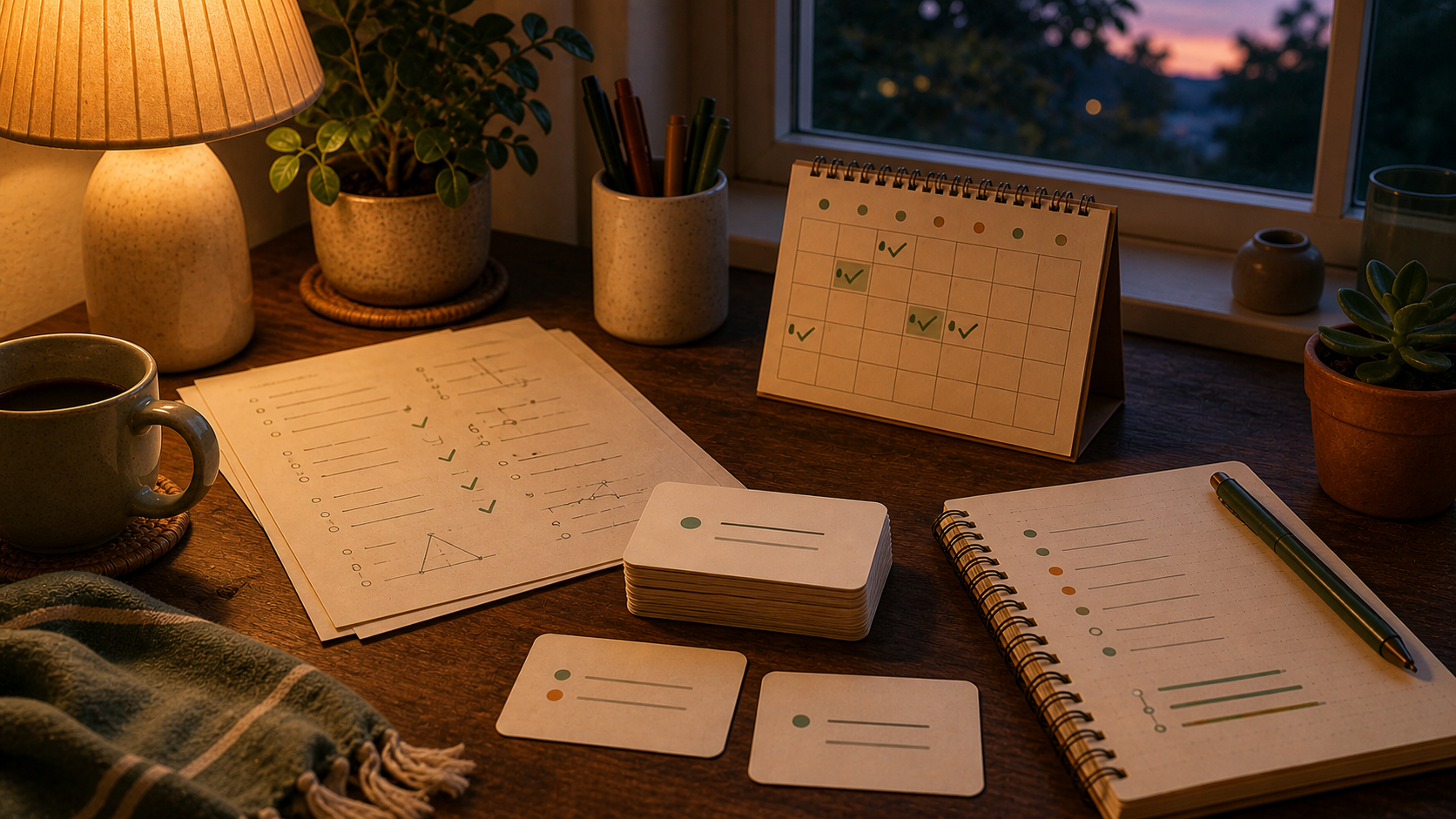
Summer study should have one job
Most summer decks get annoying because they quietly try to do four jobs at once:
- preserve a hard class you barely passed
- prepare for a retake
- brush up for a placement test
- reopen a prerequisite before next term
Pick the real reason first.
Once you do that, the deck usually shrinks fast.
That matters because forgetting over the summer is real even if the exact size of "summer slide" is still debated. In NWEA's April 30, 2026 summary on summer slide, average summer drops were much larger in math than reading, and procedural skills plus isolated facts were the part that slipped most when practice stopped. That matches what students usually notice without seeing any chart: formulas, sequences, distinctions, and terms get fuzzy first.
So I would not build a summer deck like a semester archive.
I would build it like a maintenance plan with one clear purpose.
Pick the version of summer you are actually in
You just need to keep the floor from dropping
This is the most common case.
You passed the class. You are not staring at a test date right now. But the next course assumes this material is still alive.
Think:
- algebra before calculus
- general chemistry before organic chemistry
- anatomy before physiology
- vocabulary or grammar before the next language course
Your job here is simple: keep the core terms, formulas, steps, and distinctions warm enough that September does not feel like a total reboot.
You have a retake or placement test coming
This version should be narrower and more aggressive.
You are not maintaining the whole subject. You are patching the exact holes most likely to cost points on the next attempt.
That means your best source is usually not the whole notebook. It is:
- old mistakes
- weak unit summaries
- official sample questions
- practice test misses
If you are doing placement prep, start there on purpose. College Board's ACCUPLACER practice page points students to free practice tests and downloadable sample questions. Texas A&M's math placement prep page says it plainly too: review the material ahead of time and brush up on concepts you have not seen in a while.
That is a much better summer plan than rereading whole chapters and hoping confidence appears.
You need one prerequisite back before day one
This one sneaks up on people.
There is no immediate exam, so it feels safe to ignore. Then the next class starts and the first lecture assumes you still recognize the notation, the framework, and the standard definitions.
For that situation, I would keep only unblockers:
- symbols and notation you need to parse the next course
- formulas you should recognize instantly
- standard definitions you will see right away
- common confusions that used to slow you down
That deck can stay tiny and still pay for itself.
The right summer deck is smaller than your ego wants
This is where a lot of people go wrong.
They finish one hard class, feel responsible, and dump the whole thing into a deck "for later." Then later turns into 180 due cards in July, which is a reliable way to stop opening the app.
I would keep:
- facts or steps that decay fast without use
- formulas you still need next term
- definitions you keep blending together
- mistakes you already made on quizzes, finals, or practice sets
- short compare/contrast cards that prevent common mix-ups
I would cut:
- long explanation paragraphs
- cards that only make sense with the notes open
- low-value details from units you probably will not touch again
- duplicate cards from overlapping sources
- giant "explain the chapter" prompts
If the back of a card is starting to look like a mini lecture, it probably belongs in notes, not in summer review.
That same front-and-back rule matters even more in a small seasonal deck. If card quality is the part that keeps going wrong, How to Make Better Flashcards in 2026 is the right companion.
Summer is a bad time for huge daily intake
I would keep this blunt: do not spend June building a giant deck you already know July will ignore.
Summer review works better when the load feels almost too small:
- 5 to 15 minutes
- a few times per week
- one subject at a time
- one clear reason for each card staying alive
That does not sound ambitious, which is part of why it survives.
If you need a bigger intake rule for a real deadline, How Many New Flashcards Per Day in 2026 covers the broader workload logic. Summer maintenance is usually smaller than that, not bigger.
For retakes and placement tests, start from misses
This is the cleanest shortcut I know.
If there is a real test in August or early September, your best flashcards usually come from what already beat you once.
That means:
- wrong answers on an old exam
- weak topics from a final
- official sample questions
- practice test misses
- formula steps you skipped under pressure
Those misses show where memory actually failed. Notes do not do that nearly as well.
I would turn one missed question into two or three smaller cards if needed:
- one for the concept you misunderstood
- one for the rule or formula you forgot
- one for the trap pattern that fooled you
That is much lighter than saving full question stems into the deck.
If you want the deeper workflow, How to Turn Practice Questions Into Flashcards in 2026 already covers the same idea from the exam side.
Use a weekly rhythm that can survive July
Most summer plans fail because they still feel like school.
I would use something closer to this:
| Situation | Weekly rhythm | What the deck should feel like |
|---|---|---|
| Keep a prerequisite alive | 3 short reviews per week | Easy to reopen, slightly boring |
| Retake in 6 to 10 weeks | 4 to 5 reviews per week plus practice questions | Focused, not huge |
| Placement test brush-up | Review after each practice set | Built around mistakes, not chapters |
That "slightly boring" part matters.
If the deck feels heroic, you probably built too much of it.
If it feels easy enough to open after a work shift, a beach day, or a Sunday where you did absolutely nothing useful, the size is probably about right.
Keep summer cards easy to isolate later
I would avoid building some strange temporary deck structure that turns into clutter by fall.
Keep the setup boring:
- one subject deck, if that is already how you study
- one
summer-2026tag - one purpose tag like
retake,placement, orprereq
That gives you a clean way to review only the summer slice without redesigning your whole library.
When the next term starts, you can keep it, merge it, or delete it without wondering where anything lives.
If organization is the part that keeps getting messy, How to Organize Flashcards in 2026 goes deeper on the deck-versus-tag tradeoff.
Let AI draft the boring parts, then cut hard
This is where current tools help a lot.
If you still have old lecture notes, a PDF, a study guide, or a correction sheet from a practice exam, let AI draft candidate cards from that material. Then do the part software still does badly: decide what deserves future reviews.
For a summer deck, I would be ruthless:
- delete anything obvious
- split anything broad
- rewrite anything vague
- keep only the cards you would still care about in six weeks
That last filter is the useful one.
Summer decks get bloated when people confuse "this was in the class" with "this deserves space in my August brain."
If AI already made your deck bigger than your patience, How to Fix AI Flashcards in 2026 is the cleanup guide to read first.
Where Flashcards fits well
Flashcards works nicely for this kind of summer review because the hard part is not novelty. It is staying low-friction long enough to keep showing up.
You can draft cards from notes or files, trim them into plain front/back prompts, and let FSRS handle the review timing once the deck is clean. That matters more in July than during finals week. During finals, people will tolerate a messy workflow for a few days. In summer, they will just stop opening it.
The simple starting points are the getting started guide and the features page.
The practical answer
If you want to study over summer break with flashcards without making summer feel like school again, I would keep the rules simple:
- choose one reason for the deck to exist
- keep only the material that is expensive to forget
- use misses for retakes and placement prep
- review a little, not heroically
- tag the summer slice so it does not become permanent clutter
- cut hard enough that week four still feels normal
That is the version of summer flashcards I trust.
Not a full-course preservation project. Not a fake promise that you will study two hours every day in July. Just one small deck that keeps the hard-won parts alive until you need them again.