2026 में DAT के लिए फ़्लैशकार्ड कैसे इस्तेमाल करें: Biology, Organic Chemistry, PAT, और practice-test की वे गलतियाँ जो वाकई याद रहें
अगर आप May 2026 या उसके बाद DAT दे रहे हैं, तो ADA अब भी यही कह रहा है कि updated organic chemistry specifications ज़रूर देखें। यह बात सुनने में छोटी लगती है, लेकिन जैसे ही आप कोई public deck खोलते हैं, साफ़ दिख जाता है कि आधे tags, topic names, और examples मौजूदा exam से ठीक से मेल ही नहीं खाते।
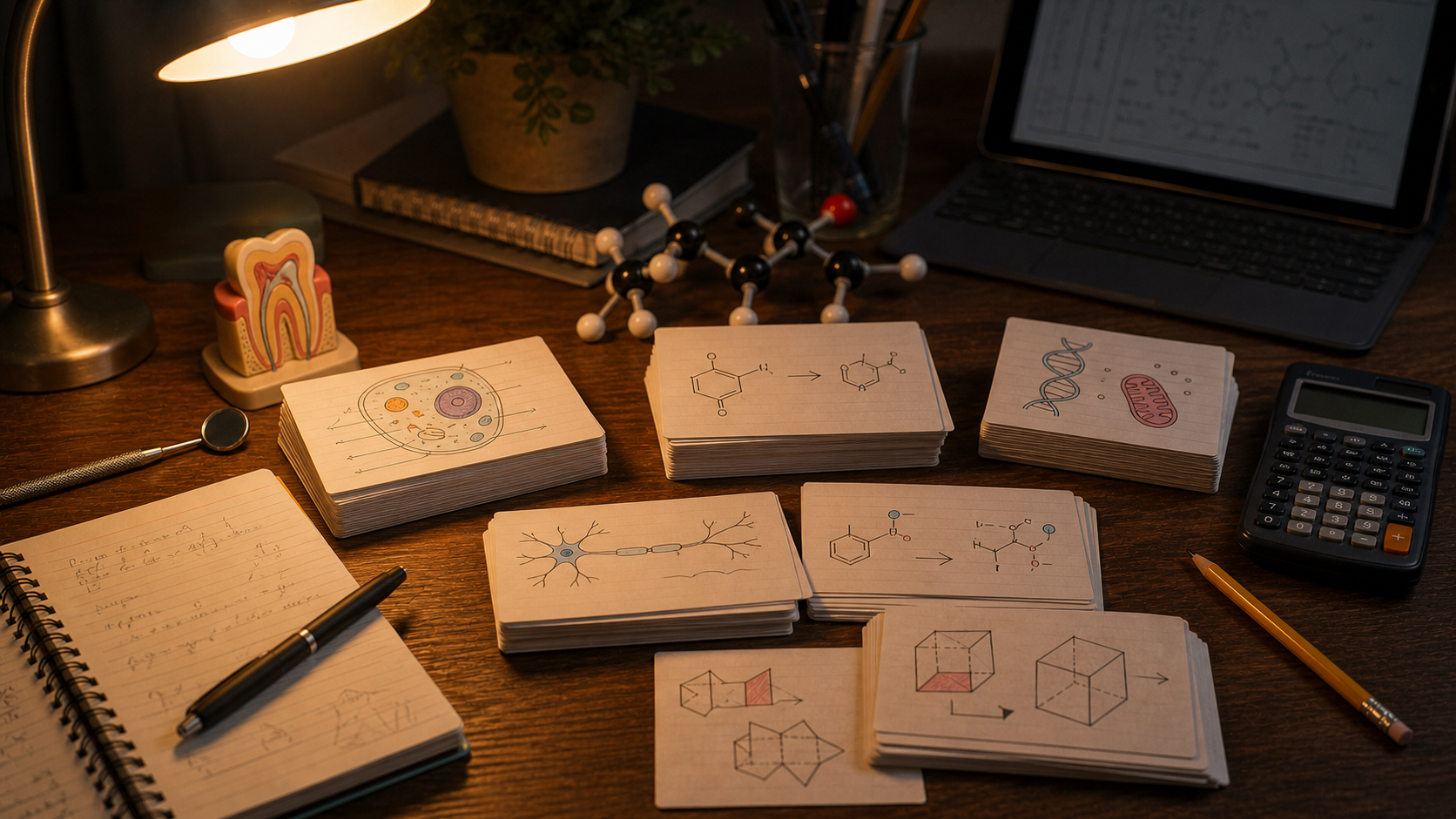
अच्छे DAT फ़्लैशकार्ड quantity पर नहीं, fit पर टिके होते हैं। Biology में छोटे retrieval cards चाहिए। Organic chemistry में mechanism और synthesis decisions चाहिए। PAT में error-pattern cards चाहिए। Practice-test की गलतियों के लिए अलग track चाहिए, क्योंकि score को अक्सर वही cards आगे बढ़ाते हैं।
2026 में DAT का असली shape पहले समझ लें
एक भी card बनाने से पहले यह पक्का कर लें कि आपका deck मौजूदा exam के हिसाब से बना है, न कि किसी पुराने Reddit post या shared deck के उस version के हिसाब से जिसे किसी ने "DAT review" कह दिया था।
ADA की मौजूदा DAT page और 2026 Candidate Guide चार sections बताती हैं: Survey of the Natural Sciences में 100 items, Perceptual Ability में 90 items, Reading Comprehension में 50 items, और Quantitative Reasoning में 40 items। Guide मौजूदा testing schedule भी बताती है: natural sciences के लिए 90 minutes, PAT के लिए 60 minutes, optional 30-minute break, reading के लिए 60 minutes, quantitative reasoning के लिए 45 minutes, और tutorial व survey time मिलाकर total administration window 5 hours 15 minutes की होती है।
यह structure इसलिए मायने रखता है क्योंकि आपका deck exam के उन हिस्सों को support करे जहाँ clean retrieval सबसे ज़्यादा काम आती है: biology की वे details जो आपस में blur हो जाती हैं, organic chemistry के वे mechanisms और spectroscopy cues जिन्हें आप आधा-अधूरा जानते हैं, PAT के error patterns, quantitative reasoning के setup traps, और reading की वे गलतियाँ जो passage analysis कमज़ोर होने से होती हैं।
मौजूदा ADA materials एक और वजह से भी ज़रूरी हैं। DAT scores 1 March 2025 से 200 से 600 reporting system पर चले गए। Content side पर ADA DAT page अभी students से कह रही है कि May 2026 या उसके बाद exam देने वाले लोग new organic chemistry specifications देखें, जबकि 2026 guide अब भी इन changes को April 2026 implementation update की तरह frame करती है। अगर आप 2026 में test दे रहे हैं, तो पुरानी DAT advice आपका study time गलत blueprint पर खर्च करवा सकती है।
एक deck काफी है, लेकिन tags सच में काम करने चाहिए
ज़्यादातर DAT students को चार अलग permanent decks की ज़रूरत नहीं होती। एक main DAT deck आम तौर पर काफी होता है, अगर sorting का काम tags कर रहे हों: bio, gen-chem, orgo, orgo-2026, pat, qr, reading, और practice-miss।
यहाँ gen-chem tag अब भी ज़रूरी है, भले ही यह article biology और organic chemistry पर ज़्यादा ज़ोर देता हो। General chemistry cards तब सबसे अच्छा काम करते हैं जब वे पूरा derivation नहीं, बल्कि deciding setup step, trend, या lab cue store करते हैं, यानी वह चीज़ जिसे आप कागज़ पर खुद practice कर सकते हैं।
Biology cards आपके notes से छोटे होने चाहिए
ADA guide Biology को पाँच broad buckets में बाँटती है: cell and molecular biology, diversity of life, structure and function of systems, genetics, और evolution and ecology। Coverage के लिए यह useful है। Card-writing template के रूप में, अगर आप इसे बहुत literally ले लें, तो यह काम नहीं करता।
बेहतर biology cards उस चीज़ को अलग करती हैं जिसे आप time pressure में miss करने वाले हैं:
- function
- location
- sequence step
- comparison
- trigger and outcome
उदाहरण: कौन-सा phase sister chromatids को अलग करता है? कौन-सा hormone blood calcium बढ़ाता है? कौन-सी immune cell thymus में mature होती है? इस selection pattern में allele frequency के साथ क्या होता है?
अगर कोई biology card आधी lecture slide जैसा दिखने लगे, तो वह बहुत बड़ा है। Biology fake familiarity को सज़ा देती है। आप page पर term पहचान सकते हैं, फिर भी उसे cold produce नहीं कर पाते। इसलिए short production-style prompts summary cards से बेहतर काम करते हैं। अगर physiology relationships बार-बार miss हो रही हैं, तो actual relationship पर cards बनाएँ। अगर genetics बार-बार फिसल रही है, तो वही inheritance pattern या gene-expression step card करें जो आपके points कटवा रही है।
Organic chemistry के लिए 2026-specific cleanup layer चाहिए
ADA की नई organic chemistry specification sheet इसे पूरी तरह नए orgo exam की तरह पेश नहीं करती। उसमें साफ़ कहा गया है कि update major content changes नहीं लाती, लेकिन topics को ज़्यादा स्पष्ट नाम देती है और subtopics की ज़्यादा comprehensive list जोड़ती है। Updated list mechanisms, chemical synthesis, acid-base chemistry, chemical and physical properties, spectroscopy, और structural evaluation पर ज़्यादा साफ़ structure देती है। यह curved arrows, reaction coordinate diagrams, multiple functional groups में reactivity, और chromatography, extractions, recrystallization, व distillation जैसी lab techniques को भी explicitly नाम देती है।
इसका मतलब है कि DAT 2026 organic chemistry update आपके फ़्लैशकार्ड को प्रभावित करना चाहिए, भले ही वह आपका पूरा study plan उलट-पुलट न करे।
मैं एक temporary orgo-2026 tag रखूँगा और इन areas पर खास नज़र रखूँगा: curved-arrow logic, one-step से multi-step synthesis, functional groups के across acidity और basicity, spectroscopy, और stereochemistry।
सबसे अच्छे DAT organic chemistry फ़्लैशकार्ड लंबे reaction maps नहीं होते। वे decision points होते हैं: कौन-सी feature इस carbonyl carbon को ज़्यादा electrophilic बनाती है? इन conditions में substitution ज़्यादा likely है या elimination? कौन-सा signal pattern para-disubstituted aromatic ring पर बेहतर fit बैठता है? इन starting materials और product के बीच कौन-सा curved-arrow step missing है?
अगर आप पहले से public decks इस्तेमाल करते हैं, तो मैं सबसे पहले इसी section का audit करूँगा। जो भी चीज़ अब भी पुराने naming पर टिकी हो, mechanism logic को text की दीवार में छिपाती हो, या नए subtopic detail को skip करती हो, उसे rewrite करना चाहिए।
PAT cards fake memorization से नहीं, repeated misses से आने चाहिए
PAT वह section है जहाँ फ़्लैशकार्ड के साथ गलत तरीके से पढ़ाई करना सबसे आसान है।
ADA guide कहती है कि Perceptual Ability Test में छह subtests होते हैं: apertures, view recognition, angle discrimination, paper folding, cube counting, और spatial relations या 3D form development। इसका मतलब यह नहीं है कि आप PAT को fact deck में बदल दें।
आप PAT content memorize नहीं कर रहे। आप बार-बार दोहराई जाने वाली visual mistakes ठीक कर रहे हैं।
आम तौर पर इसका मतलब ऐसे cards होते हैं: जब दो angles लगभग एक जैसे दिखें, तो पिछली बार कौन-सा visual cue आपको सही ranking तक ले गया? Paper folding में hole symmetry के पीछे भागने से पहले पहली check क्या है? Cube counting में कौन-सा hidden face आपसे छूटा था? Apertures में कौन-सी shape constraint ने tempting wrong answer को eliminate किया?
ये error-pattern cards हैं। हर problem के लिए card नहीं चाहिए। उस bad habit के लिए card चाहिए जो problem के नीचे छिपी है।
Quantitative reasoning cards पूरे solutions नहीं, setup store करें
ADA guide Quantitative Reasoning को algebra, inequalities, exponential notation, ratios and proportions, graphical analysis, data analysis, quantitative comparison, probability and statistics, और applied word problems के आसपास describe करती है। यह भी बताती है कि section के दौरान candidates को digital calculator मिलता है।
इससे एक साफ़ flashcard rule निकलता है: setup step या trap store करें, और पूरी math के लिए practice problems का इस्तेमाल करें।
काम के QR cards अक्सर percent और ratio setup, conversion habits, probability wording traps, formula recall, graph checks, और inequality mistakes कवर करते हैं। उदाहरण: जब आप inequality की दोनों sides को negative number से multiply करते हैं तो क्या बदलता है? कौन-सा setup बताता है कि ratio question part-to-part चाहता है या part-to-whole? कौन-सा probability phrase आम तौर पर complement thinking की ओर इशारा करता है?
यहीं बहुत-से DAT Anki decks अनावश्यक रूप से फूल जाते हैं। वे पूरे worked solutions store करते हैं, जो एक बार helpful लगते हैं और हमेशा के लिए खराब review material बन जाते हैं। अगर कोई card हर बार पूरा minute और scratch work की तीन lines मांगती है, तो वह शायद आपके daily due queue में नहीं, problem set review में होनी चाहिए।
Reading comprehension और science-heavy stems के लिए भी error-pattern cards बनाएँ
ADA कहती है कि Reading Comprehension में तीन scientific passages होते हैं, और items का जवाब देने के लिए prior science knowledge की ज़रूरत नहीं होती। Reading misses ज़्यादातर structure, evidence, और pacing की समस्या होती हैं, न कि बाहर के facts की।
मैं सिर्फ recurring mistakes को card करूँगा, जैसे author के claim से अपनी assumption की तरफ drift कर जाना, contrast words miss कर देना जो paragraph का meaning पलट देते हैं, ऐसा answer चुन लेना जो scientific तो लगता है लेकिन supported नहीं है, या science-heavy stem में graph label या unit overlook कर देना।
इन cards को decision reminders की तरह सुनाई देना चाहिए: ऐसा answer चुनने से पहले जो broadly true लगता है, मुझे क्या verify करना चाहिए? Contrast paragraph में कौन-सी sentence आम तौर पर सबसे ज़्यादा मायने रखती है? किस तरह की wording बताती है कि सवाल evidence पूछ रहा है, inference नहीं?
Practice-test misses पूरे deck के सबसे high-value cards होते हैं
मैं इस हिस्से को सबसे गंभीरता से लूँगा।
Cards की पहली batch content review से आ सकती है। सबसे मजबूत batch अक्सर बाद में आती है, जब practice tests साफ़ दिखा देते हैं कि वास्तव में कहाँ टूटन है।
यहाँ एक अहम boundary है। ADA candidate guide बहुत साफ़ कहती है कि exam questions confidential और copyrighted material हैं, और memorized items पर चर्चा करना या उन्हें distribute करना मना है। इसलिए practice work से cards बनाते समय miss को concept, rule, या reasoning cue में बदलें। Memory से असली DAT items recreate करने की कोशिश न करें।
Practical workflow सीधा है:
- Miss को उसी समय review करें जब आपको अब भी याद हो कि आपने wrong answer क्यों चुना।
- एक sentence लिखें कि सही answer सच में सही क्यों था।
- उस sentence को सबसे छोटे reusable lesson तक घटाएँ।
- उसी lesson से एक card बनाएँ।
उदाहरण: अगर आपने biology item इसलिए miss किया क्योंकि lysosome और peroxisome की roles गड़बड़ा दीं, तो वही distinction card करें। अगर organic chemistry item इसलिए miss हुआ क्योंकि product predict करने से पहले आपने acid-base step ignore कर दिया, तो वही decision point card करें। अगर QR problem इसलिए miss हुई क्योंकि ratio उल्टा set किया, तो पूरे story problem की जगह setup rule card करें।
How to Turn Practice Questions Into Flashcards in 2026 इस workflow को और गहराई से समझाता है, और DAT के लिए यह खास तौर पर अच्छा बैठता है क्योंकि exam बड़े knowledge gaps से ज़्यादा repeated small misses पर असर दिखाता है।
AI से rough cards draft कराएँ, फिर skeptic की तरह edit करें
DAT prep में AI तब उपयोगी है जब आप उसे authority नहीं, drafting assistant की तरह treat करें। अच्छे use cases हैं: साफ़ biology notes को short Q-and-A candidates में बदलना, organic chemistry mistake log को tighter बनाना, या PAT review note को reusable rule card में बदलना। खराब use cases हैं: किसी giant auto-generated deck पर भरोसा करना, या ऐसे cards रख लेना जो polished तो लगते हों लेकिन test कुछ भी नहीं करते।
अगर आप drafting, reviewing, और editing एक ही जगह रखना चाहते हैं, तो Flashcards Open Source App यहाँ natural fit है। Hosted app card creation, FSRS review, और AI chat को एक workflow में जोड़ता है, ताकि आप अपने notes या mistake logs से cards draft करें और review में डालने से पहले उन्हें साफ़ कर लें। Product surface Features पर समझाया गया है और setup Getting Started में covered है।
Editing rule सीधी है: हर card एक ही चीज़ test करे जिसे आप pressure में सच में retrieve करना चाहते हैं। अगर वह ऐसा नहीं करती, तो उसे delete कर दें।
FSRS तब सबसे अच्छा काम करता है जब आपका DAT schedule tidy रहना बंद कर देता है
DAT prep आम तौर पर साफ़-सुथरे ढंग से शुरू होती है और uneven होकर खत्म होती है। फिर practice blocks लंबे हो जाते हैं, weak areas बदलते रहते हैं, और एक full-length review session एक ही दोपहर में तीस नए cards पैदा कर देती है। यहीं FSRS काम आता है। यह easy cards को background में जाने देता है और hard cards को तब तक वापस लाता रहता है जब तक वे सच में बैठ न जाएँ।
एक practical cadence ऐसा दिखता है: हर दिन due cards review करें, नए cards छोटी batches में जोड़ें, हर set के बाद practice-miss cards डालते रहें, और जिन cards को wording की वजह से बार-बार miss कर रहे हों उन्हें rewrite करें।
अगर scheduling side को और detail में समझना है, तो FSRS Settings in 2026 और How to Study for an Exam With FSRS in 2026 सही companion reads हैं।
फ़्लैशकार्ड के साथ एक sample weekly DAT study schedule
अगर आपको एक concrete starting point चाहिए, तो मैं heroic weekend sprint की जगह इस तरह के DAT study schedule पर ज़्यादा भरोसा करूँगा।
Monday: due cards review करें, biology का एक block पढ़ें, और सिर्फ weak points से 8 से 15 नई biology cards बनाएँ।
Tuesday: PAT practice करें, बार-बार दोहराई जाने वाली visual mistakes को 3 से 8 short rule cards में बदलें, फिर उसी दिन बाद में due cards clear करें।
Wednesday: updated 2026 specification list पास रखकर organic chemistry पढ़ें और mechanism, spectroscopy, या acidity cards की छोटी batch बनाएँ।
Thursday: quantitative reasoning, reading, या general chemistry practice करें, फिर सिर्फ reusable setup errors या evidence mistakes के लिए cards जोड़ें।
Friday: due cards review करें, sciences, PAT, और QR में short mixed practice block चलाएँ, और misses को उसी समय cards में बदलें जब logic अब भी fresh हो।
Saturday: लंबा practice set या full-length section work करें। पहले mistake log लिखें। Cards बाद में बनाएँ।
Sunday: इसे हल्का रखें। कमजोर cards delete करें, overloaded cards को split करें, और देखें कि कहीं कोई एक section गलत वजह से deck पर हावी तो नहीं होने लगा।
यह इसलिए काम करता है क्योंकि DAT prep कठिन होने के साथ भी deck reviewable बना रहता है।
अगर आपका deck दूसरी binder जैसा लगने लगे, तो उसे trim करें। इसका उपयोगी version biology facts, organic chemistry decision points, PAT visual habits, QR setup traps, और reading mistakes के लिए एक compact memory layer होता है, यानी वही चीज़ें जो बार-बार लौटती रहती हैं।